Quick answer: Yes, Ecuador’s main tourist routes are safe with normal precautions. As of September 2026 the US rates Ecuador Level 2 (exercise increased caution), with Level 4 zones in parts of Guayaquil, Durán, El Oro, Los Ríos and Esmeraldas. The UK advises against all but essential travel to the seven coastal provinces. Quito, the Andes and Galápagos have no specific warnings.
Updated September 2026 by our local guides in Quito.
| Ecuador safety at a glance (as of September 2026) | Status |
|---|---|
| US State Department | Level 2, exercise increased caution (updated August 18, 2026) |
| US Level 4 (do not travel) areas | South Guayaquil, Nueva Prosperina, Pascuales, Durán, Huaquillas, Arenillas, Quevedo, Quinsaloma, Pueblo Viejo, Esmeraldas City and the north |
| UK FCDO | Against all but essential travel to Esmeraldas, Manabí, Santa Elena, Guayas, El Oro, Los Ríos and Santo Domingo, and within 20 km of the Colombian border (updated September 16, 2026) |
| State of emergency | 60 days from September 15, 2026, in 8 provinces (including Pichincha) and 3 cantons |
| Curfew | Midnight to 5:00, September 17–30, 2026, in Guayas, El Oro, Los Ríos and Manabí only |
| Not under any US or UK warning | Quito, Otavalo, Baños, Cotopaxi and Quilotoa, Cuenca, Galápagos |
“Is Ecuador safe?” is one of the questions we get most often, and it deserves a real answer rather than a yes or no. Ecuador’s security picture is very different from one region to another, and the areas with serious problems are mostly outside the classic Quito, Andes, Amazon and Galápagos route. We are local guides who live and work in Quito, and we take travelers out every day, so this guide explains what the official advisories say, where the real risks are and what we do to keep our groups safe in 2026.
The Honest Answer: It Depends on Where You Go
Ecuador is safe enough for most travelers if you stay on the main tourist routes and take big-city precautions, but it is not safe everywhere. The violence of the last few years is driven by drug trafficking gangs, and it is concentrated on the coast, in the ports and along the Colombian border.
Official advisories ask for increased caution across the whole country, and the government has declared new states of emergency during 2026. Even so, hundreds of thousands of visitors travel through Quito’s Old Town, the highlands and the Galápagos every year without problems. Tourists are rarely the target of gang violence; the realistic risks for visitors are theft, pickpocketing and unsafe taxis.
What do the US and UK travel advisories say in 2026?
As of September 2026, the US State Department keeps Ecuador at Level 2, “exercise increased caution,” with specific zones at Level 3 and Level 4. The UK Foreign Office (FCDO) advises against all but essential travel to the seven coastal provinces and the Colombian border strip.
- US Level 4, do not travel: Guayaquil south of Portete de Tarqui Avenue, plus the Nueva Prosperina and Pascuales districts; Durán; Huaquillas and Arenillas (El Oro); Quevedo, Quinsaloma and Pueblo Viejo (Los Ríos); Esmeraldas City and everything north of it to the Colombian border and east to Carchi.
- US Level 3, reconsider travel: the rest of Guayaquil, the rest of El Oro and Los Ríos, Esmeraldas province south of the city, and the provinces of Sucumbíos, Manabí, Santa Elena and Santo Domingo.
- UK, against all but essential travel: Esmeraldas, Manabí, Santa Elena, Guayas, El Oro, Los Ríos and Santo Domingo de los Tsáchilas, and within 20 km of the Colombian border except El Ángel Ecological Reserve, the Rumichaca crossing, Tulcán town and the Pan-American Highway in Carchi. Airside transit at Guayaquil airport is not included.
Check both pages again the week you fly, because they change. If you are a UK traveler, going to an area the FCDO advises against can invalidate your travel insurance.
Is there a state of emergency in Ecuador right now?
Yes. On September 15, 2026, President Daniel Noboa signed Executive Decree 498, a 60-day state of emergency in Guayas, Pichincha, Manabí, Los Ríos, El Oro, Esmeraldas, Santa Elena and Santo Domingo, plus the cantons of Camilo Ponce Enríquez, Las Naves and La Maná.
For travelers, the practical effects are more police and military checkpoints and the possibility of searches. A curfew from midnight to 5:00 applies from September 17 to 30, 2026, only in Guayas, El Oro, Los Ríos and Manabí. Quito is inside the state of emergency but not under curfew, and our tours run normally. Carry your passport or a clear copy at all times, because checkpoints ask for ID.
Areas to Approach With Extra Caution
The areas that need extra caution are the Colombian border, Guayaquil and the rest of the coast, and the northern province of Esmeraldas. None of them are on a typical first-time Andes and Galápagos itinerary.
- The Colombian border: avoid areas within 20 km of the border, except the official Rumichaca crossing near Tulcán, Tulcán town and the Pan-American Highway, where the UK makes exceptions.
- Guayaquil and the coast: gang violence has grown in Guayaquil, Durán, Manta, Machala and other port cities. Beach towns such as Montañita are in provinces covered by the UK warning.
- Esmeraldas and Sucumbíos: both sit on drug trafficking corridors. Esmeraldas City and the north are US Level 4. Sucumbíos, where the Cuyabeno reserve is, is US Level 3, while the UK only warns against its 20 km border strip.
Is Guayaquil safe in 2026?
Guayaquil is currently the least safe major city in Ecuador for visitors, and we do not recommend it as a sightseeing stop in 2026. The US rates the south of the city, Nueva Prosperina, Pascuales and neighboring Durán as Level 4 and the rest as Level 3, and the UK advises against all but essential travel to Guayas province.
The murder rate is very high, mostly from gang conflicts, and in October 2025 a car bomb exploded near the Mall del Sol and the Sheraton hotel in the north of the city. Guayas is also under the September 2026 curfew. If you must pass through, for example on a Galápagos flight, stay airside (the UK advice exempts airside transit), book a hotel next to the airport and use hotel transport. The simpler option is to fly to the Galápagos from Quito.
How safe is each region of Ecuador?
Risk in Ecuador depends on the specific place and time of day. This table summarizes the official advisories and what our guides see on the ground.
| Area | Advisory status (Sept 2026) | Practical risk note |
|---|---|---|
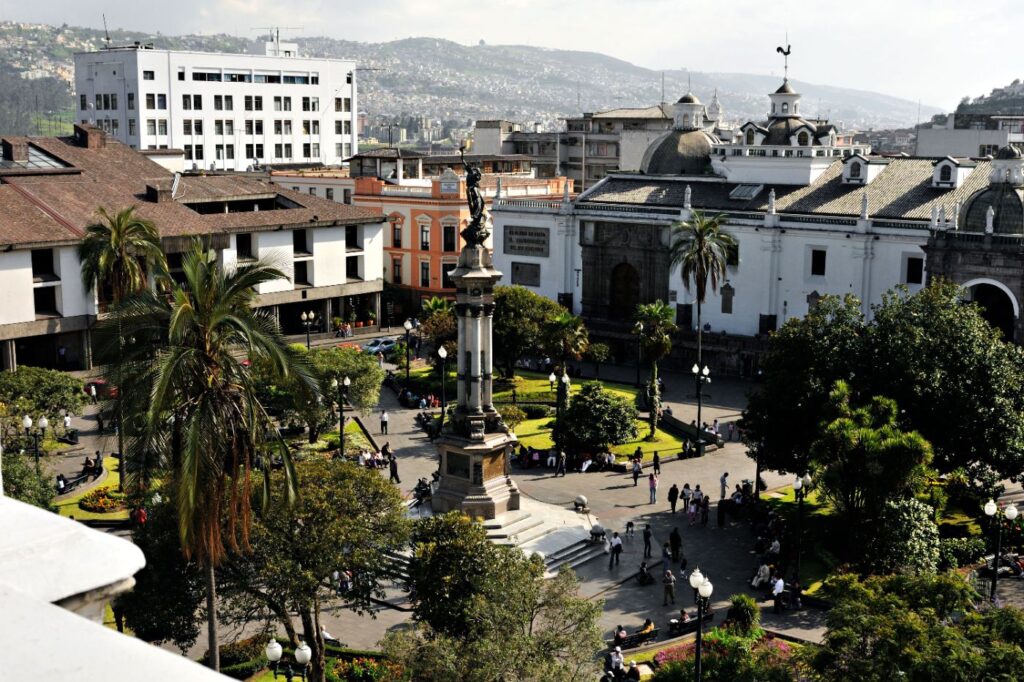
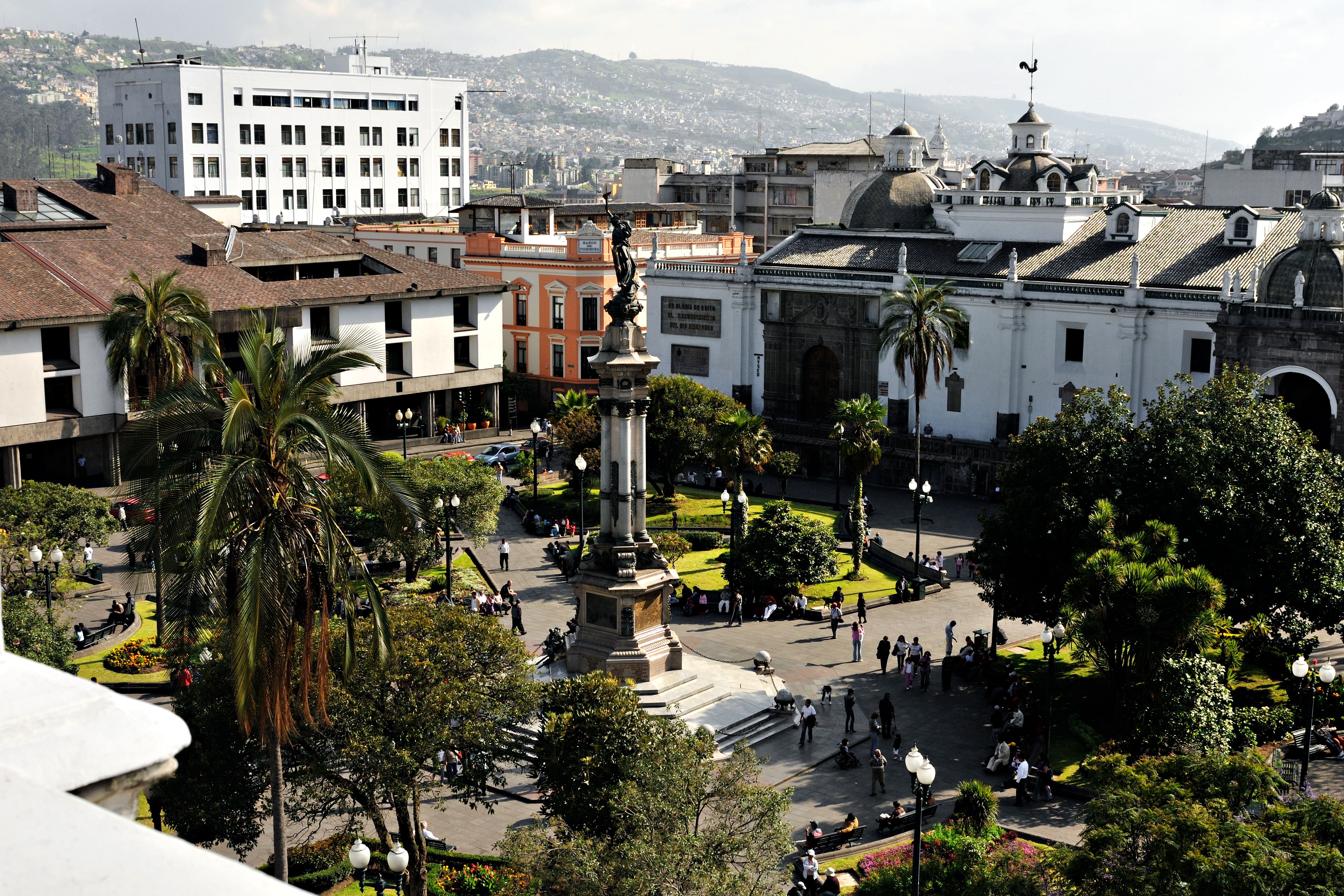
| Quito Old Town | No specific warning; Pichincha under state of emergency, no curfew | Pickpocketing in crowds, plazas and on the trolley bus. Busy and fine by day; take an app taxi after dark. |
| La Mariscal (Quito New Town) | No specific warning | Nightlife area around Plaza Foch. Bag snatching and drink spiking at night; do not walk back alone late. |
| El Panecillo and Pichincha trails | No specific warning | Take a taxi up El Panecillo instead of walking the stairs. Hike above the TeleferiQo in a group. |
| Otavalo | No specific warning | Crowded Saturday market: watch pockets and phones. Travel by day. |
| Baños | No specific warning | Low crime. Main risks are adventure sports, so choose licensed operators. |
| Cotopaxi and Quilotoa | No specific warning (La Maná canton, in the lowlands, is in the emergency) | Very safe for crime. Risks are altitude, cold and weather on the volcano. |
| Amazon: Cuyabeno (Sucumbíos) | US Level 3 province; UK warns only for the 20 km border strip | Lodges are remote and quiet. Travel with a licensed operator and do not linger in Lago Agrio. |
| Amazon: Tena and Napo | No specific warning | Low crime. Rafting and river safety matter most. |
| Galápagos | No specific warning | Very low crime. Check that boats have licenses and life jackets. |
| Guayaquil | US Level 4 in the south and some districts, Level 3 elsewhere; UK against all but essential travel | High gang violence and curfew until September 30, 2026. Stay airside or fly via Quito. |
| Montañita and Santa Elena coast | US Level 3; UK against all but essential travel | Reports of assaults on foreign women. Not recommended for now. |
| Esmeraldas and northern border | US Level 4; UK against all but essential travel | Drug trafficking routes. Avoid. |
Ecuador’s Safer Regions for Travelers
The Galápagos, Quito’s main tourist areas and the central Andes are the safest parts of Ecuador for travelers in 2026. None of them are under a US or UK warning, and they receive steady tourist traffic all year.
The Galápagos have very little crime against tourists. Quito’s Historic Center, the Cotopaxi and Quilotoa region, Otavalo, Baños and Cuenca are also well-traveled and safe with city-standard precautions, especially with a local guide. For more on the capital’s classic sights, see our one-day Old Town itinerary, our Baños guide and the Otavalo market guide.
In the Andes, the dangers are often natural rather than criminal. Quito sits at 2,850 m and Cotopaxi’s refuge at about 4,864 m, so read our guide to altitude sickness in Quito before you arrive.
Practical Safety Tips for Every Traveler
Most problems for tourists in Ecuador are avoidable with a few habits: keep valuables out of sight, never hail taxis from the street and avoid walking alone late at night.
- Use app taxis or radio-dispatched taxis, especially at night and from the airport. The UK warns that express kidnappings, short robberies where victims are driven to ATMs, often start with a taxi hailed on the street.
- Keep your phone away in crowded places, on buses and at bus stations. In Quito’s bus terminals, thieves sometimes pose as inspectors and ask you to put your bag in the overhead rack.
- Keep your big bag under your seat or between your feet on intercity buses, never on the rack above you.
- Do not walk alone late at night, even in tourist zones, and take a taxi between neighborhoods after dark.
- Carry a copy of your passport and keep the original somewhere safe. During the state of emergency, you may be asked for ID at checkpoints.
- Avoid protests and strikes, which can block roads with little notice.
- Check the official advisories the week you travel, and register with your embassy if your country offers it (for example, the US STEP program).
Local tip: In Quito’s Old Town, the streets between Plaza Grande, La Ronda and the San Francisco church are busy and heavily policed during the day, but they empty fast after about 8 pm. If you eat dinner in La Ronda, ask the restaurant to call you a taxi rather than walking back.
Why Traveling With a Local Guide Matters
A local guide makes Ecuador safer because they know which streets, routes and times to avoid, and they handle transport and surprises for you. They also add cultural context you will not get from a guidebook.
Our guides are Ecuadorians who live in Quito, check the news daily and adjust routes when there are protests or road closures. On our day tours, transport is arranged from central pickup points, so you never need to find a bus terminal or a taxi at 6 am. Community-based tourism, run by local people, is also a responsible way to explore Ecuador. Learn more about how we work with local communities or read about Community Adventures Ecuador.
Free Walking Tour Quito · free (tip-based) · 3 hours · Monday to Saturday 10:30 and 14:30, Sunday 10:30
Spend your first day in the Old Town with an English-speaking Ecuadorian guide who shows you the plazas, churches, market and a chocolate tasting, plus which streets to use after dark. Meet 10 minutes early at Pedro Fermín Cevallos N6-78 y Olmedo.
Local tip: Save our WhatsApp number (+593 97 953 3832) before you land. If a strike blocks a road or you are unsure about a place, message us and a local will answer.
Related guides
- Ecuador visa and entry requirements
- How much does a trip to Ecuador cost in 2026?
- Cuyabeno vs Yasuní: which Amazon reserve?
- Ecuador travel facts and figures 2026
- Ecuador travel glossary
Plan it with us
Have a question about a specific route or date? Visit our office at Pedro Fermín Cevallos N6-78 y Olmedo in Quito’s Old Town, message us on WhatsApp at +593 97 953 3832, or email info@communitytravel.ec.
Frequently asked questions
Is Quito safe for tourists in 2026?
Quito’s Old Town, La Mariscal and the main sights are generally safe by day with normal big-city care, and neither the US nor the UK has a specific warning for the city. Pichincha province is in the September 2026 state of emergency, but there is no curfew. The main risks are pickpocketing and unregistered taxis, so use app or radio taxis at night.
Is Guayaquil safe to visit right now?
Guayaquil is the riskiest big city in Ecuador in 2026. The US rates its southern area plus Nueva Prosperina and Pascuales as Level 4, do not travel, and the UK advises against all but essential travel to Guayas. A midnight to 5:00 curfew runs until September 30, 2026. If connecting to the Galápagos, stay airside or fly from Quito instead.
Is the Galápagos safer than mainland Ecuador?
Yes. The Galápagos are among the safest places in Ecuador, with very little crime against tourists, and they are not included in any US or UK warning or in the September 2026 state of emergency. The main safety issues are at sea: choose licensed boats with life jackets and follow your naturalist guide’s instructions when snorkeling.
Is it safe to visit the Amazon in Ecuador?
Yes, with a licensed operator. The Cuyabeno reserve is in Sucumbíos, which the US rates Level 3, while the UK only warns against the 20 km strip along the Colombian border. Lodges are remote and calm; the practical risks are transfers and wildlife. Tena and Napo have no specific warnings. Get a yellow fever vaccine at least 10 days before an Amazon trip.
Should I cancel my Ecuador trip because of the news?
Usually not. Most violence is gang-related and concentrated on the coast and northern border, away from the Quito, Andes, Amazon and Galápagos route most travelers follow. Check the US and UK advisories the week you fly, avoid the listed provinces, and travel with a reputable local operator. UK travelers should confirm their insurance covers every area they plan to visit.
Is Ecuador safe for solo female travelers?
Many women travel solo in Ecuador without problems, especially in Quito, Baños, Otavalo and the Galápagos. Take the usual precautions: app taxis at night, watch your drink in bars, and avoid walking alone late. The UK Foreign Office specifically mentions serious assaults on foreign women in the beach town of Montañita, which is also inside the provinces it advises against.
Quick reference: Ecuador travel facts and figures 2026 · Ecuador travel glossary · About Community Adventures Ecuador