Quick answer: Quito began as a settlement of the Quitu and other Andean peoples, became the Inca Empire’s northern capital in the late 1400s, and was refounded by the Spanish on December 6, 1534. It led early independence movements (1809) and, in 1978, its Old Town became one of the first two UNESCO World Heritage Sites in the world.
Updated September 2026 by our local guides in Quito: this post used to be a short travel diary about arriving in the city. We rewrote it as the short history of Quito our guests keep asking us for, and kept our favorite sunset spot from the original.
We walk Quito’s Old Town every day with travelers, and the question we hear most in the plazas is simple: how did all this get here? This is the story in brief, from the first villages in the valley to the churches, independence plazas and Metro of today.
Who lived in Quito before the Inca?
People settled the high valley under the Pichincha volcano thousands of years before the Inca arrived. Around 3,000 years ago, farming villages of the Cotocollao culture grew in what is now northern Quito, and the Rumipamba archaeological park, inside the city, shows house foundations and paths used over many centuries.
By the 1400s, the area was home to the peoples the Spanish chronicles call the Quitu, along with neighbors such as the Caranqui to the north. The valley was a crossroads: traders brought shells and salt from the coast, and products from the Amazon crossed the Andes here. That position is a large part of why Quito became important to every power that followed.
What was Quito like under the Inca?
In the second half of the 15th century, Inca armies pushed north from Cusco. The campaigns begun under Túpac Yupanqui were completed by his son Huayna Capac, who met fierce resistance from the northern peoples, remembered at Laguna Yahuarcocha. Quito became the empire’s northern capital, protected by hilltop forts such as Pucará de Rumicucho.
Huayna Capac spent long periods in the north. After his death, around 1527, his sons Huáscar, based in Cusco, and Atahualpa, closely linked to Quito, fought a civil war. Atahualpa won just as Francisco Pizarro arrived, and he was captured and executed by the Spanish at Cajamarca in 1533.
How did the Spanish found Quito in 1534?
When the Spanish marched north, the Inca general Rumiñahui organized the resistance. According to the chronicles, the Inca city was burned and abandoned before the conquerors arrived, so almost nothing of Inca Quito survives above ground. Rumiñahui was captured and executed in January 1535.
The founding happened in two steps. On August 28, 1534, Diego de Almagro founded “San Francisco de Quito” on paper near present-day Riobamba, and on December 6, 1534, Sebastián de Benalcázar and 204 settlers established the city at its current site. Quiteños still celebrate December 6 with a week of fiestas.
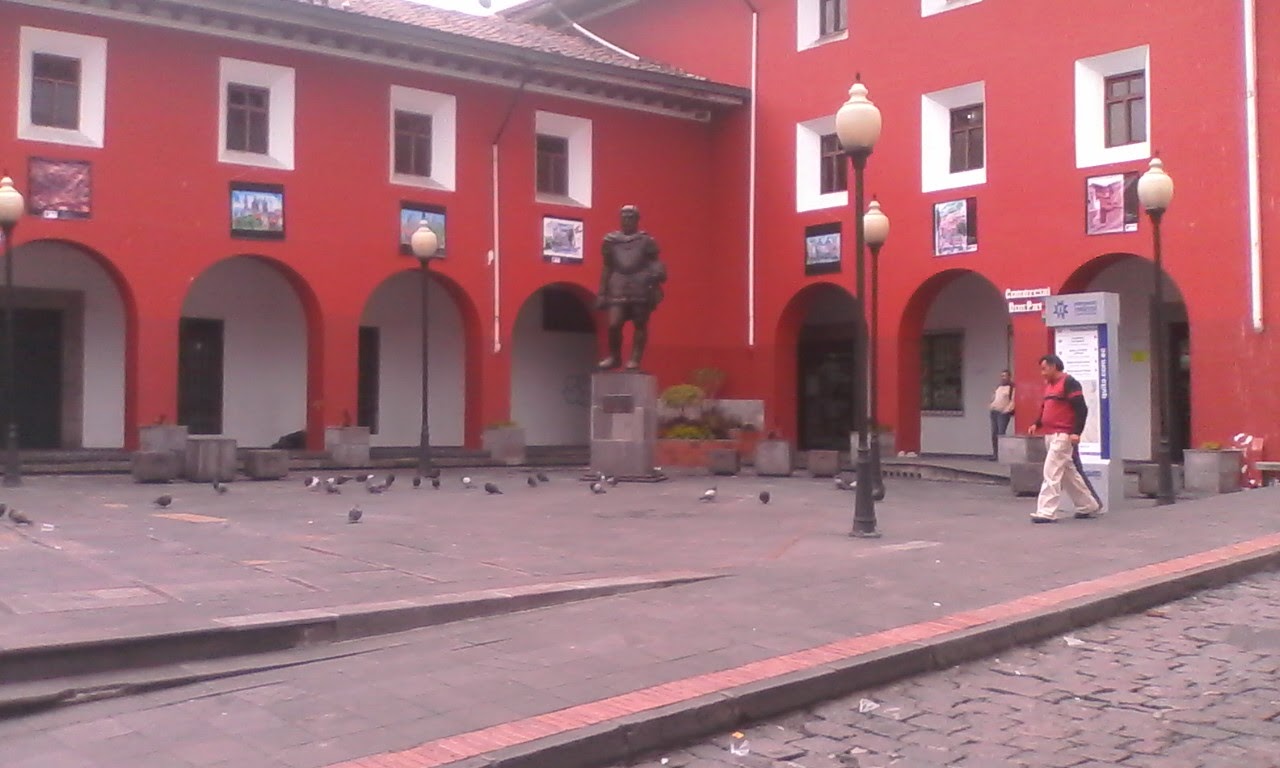
Local tip: Look closely at the stones of the Church of San Francisco’s atrium and at the walls of some Old Town streets. Much of the colonial city was built on Inca and earlier foundations, and some cut stones were reused from older buildings.
Why is Quito’s Old Town so full of churches?
In 1563, Quito became the seat of the Real Audiencia de Quito, the colonial court that governed a territory much larger than today’s Ecuador. Religious orders (Franciscans, Dominicans, Augustinians, Mercedarians and Jesuits) arrived with the Spanish and competed to build the grandest churches and convents, often using Indigenous labor.
The result is a dense grid of plazas and domes. The Church of San Francisco was begun in the 1530s, and the Jesuit church of La Compañía took from 1605 to 1765 to finish, with its famous gilded interior. Local artists trained in these workshops created the Quito School (Escuela Quiteña), a style of painting and sculpture that mixed European models with Andean details. Bernardo de Legarda’s winged Virgin of 1734, copied in giant form on El Panecillo, is its best-known work.
Colonial Quito was also a city of protest. The Rebellion of the Alcabalas (1592–1593) opposed new sales taxes, and the Rebellion of the Barrios (1765) briefly put the city’s neighborhoods in control. In 1736, the French Geodesic Mission arrived to measure the Earth near the equator, a story told at Mitad del Mundo.
What role did Quito play in independence?
On August 10, 1809, a group of Quito’s leaders formed a governing junta, one of the first moves toward independence in Spanish America. That is why Quito is nicknamed “Luz de América”, the light of America. The movement was crushed, and on August 2, 1810, many of its leaders were killed in the royal barracks, now a museum next to the Plaza Grande.
Final independence came on May 24, 1822, when troops under Antonio José de Sucre defeated the Spanish at the Battle of Pichincha, fought on the slopes above the city. Quito joined Simón Bolívar’s Gran Colombia, and in 1830 it became the capital of the new Republic of Ecuador.
How did Quito grow in the 19th and 20th centuries?
For most of the 1800s, Quito was an isolated mountain capital, days away from the port of Guayaquil by mule. That changed in 1908, when the railway from Guayaquil reached the city at Chimbacalle station, the line that today includes the Devil’s Nose section near Alausí.
In the 20th century the city spread north and south along its long, narrow valley, and wealthier families moved out of the Old Town to newer neighborhoods such as La Mariscal. An earthquake in March 1987 damaged many colonial buildings and led to a long restoration program. Today Quito sits at about 2,850 m and is home to around 2.8 million people in the metropolitan area. The underground Metro, running north to south under the valley, opened on December 1, 2023.
Why is Quito a UNESCO World Heritage Site?
In 1978, Quito and Kraków, Poland, were the first cities added to UNESCO’s World Heritage List. UNESCO recognized Quito’s historic center as one of the best-preserved and least altered in Latin America, with its colonial street grid, churches, convents and the Quito School art inside them. You can read the full listing on the UNESCO World Heritage website.
Quito history timeline
| Date | Event | Where to see it today |
|---|---|---|
| c. 1000 BC and earlier | Farming villages of the Cotocollao culture and other early settlers | Rumipamba archaeological park |
| Late 1400s | Inca conquest under Túpac Yupanqui and Huayna Capac; Quito becomes the northern capital | Pucará de Rumicucho |
| 1533–1535 | Atahualpa executed; Rumiñahui resists; Inca city burned and abandoned | Museo Nacional (MuNa) |
| August 28 and December 6, 1534 | Spanish founding and refounding of San Francisco de Quito | Plaza de San Francisco |
| 1563 | Seat of the Real Audiencia de Quito | Plaza Grande |
| 1605–1765 | Construction of La Compañía; rise of the Quito School of art | La Compañía, San Francisco |
| 1736 | French Geodesic Mission arrives to measure the equator | Mitad del Mundo |
| August 10, 1809 | First governing junta: “Luz de América” | Plaza Grande |
| May 24, 1822 | Battle of Pichincha secures independence | Cima de la Libertad |
| 1830 | Quito becomes capital of the Republic of Ecuador | Carondelet Palace |
| 1908 | Railway from Guayaquil reaches Quito | Chimbacalle station |
| 1978 | Old Town among the first UNESCO World Heritage Sites | The whole historic center |
| December 1, 2023 | Quito Metro opens | San Francisco Metro station |
Where can you see Quito’s history today?
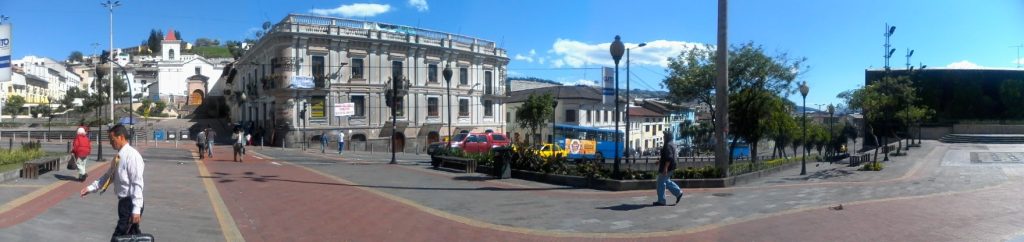
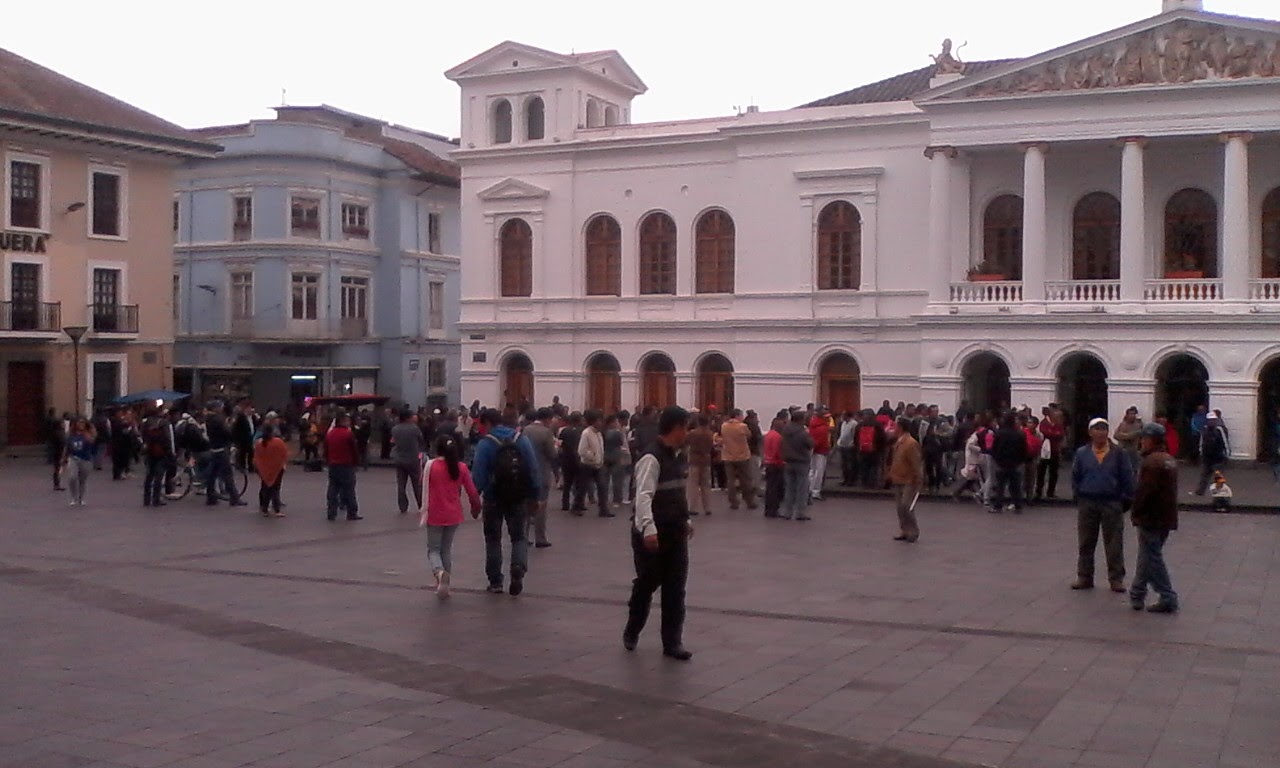
Almost everything in this story sits within a few blocks of our office. Start at the Plaza de San Francisco, walk to the Plaza Grande, and continue along La Ronda. For the pre-Hispanic side, the Museo Nacional (MuNa) at the Casa de la Cultura has free entry and some of the country’s best archaeological collections. For a day-by-day plan, see our one perfect day in Quito’s Old Town and things to do in Quito.
Free Walking Tour Quito · Free (tip-based) · 3 hours · Mon–Sat 10:30 & 14:30, Sun 10:30
The easiest way to see this history is on foot with someone who grew up here. Our Ecuadorian guides take you through the plazas, colonial churches and a local market, with a chocolate tasting on the way.
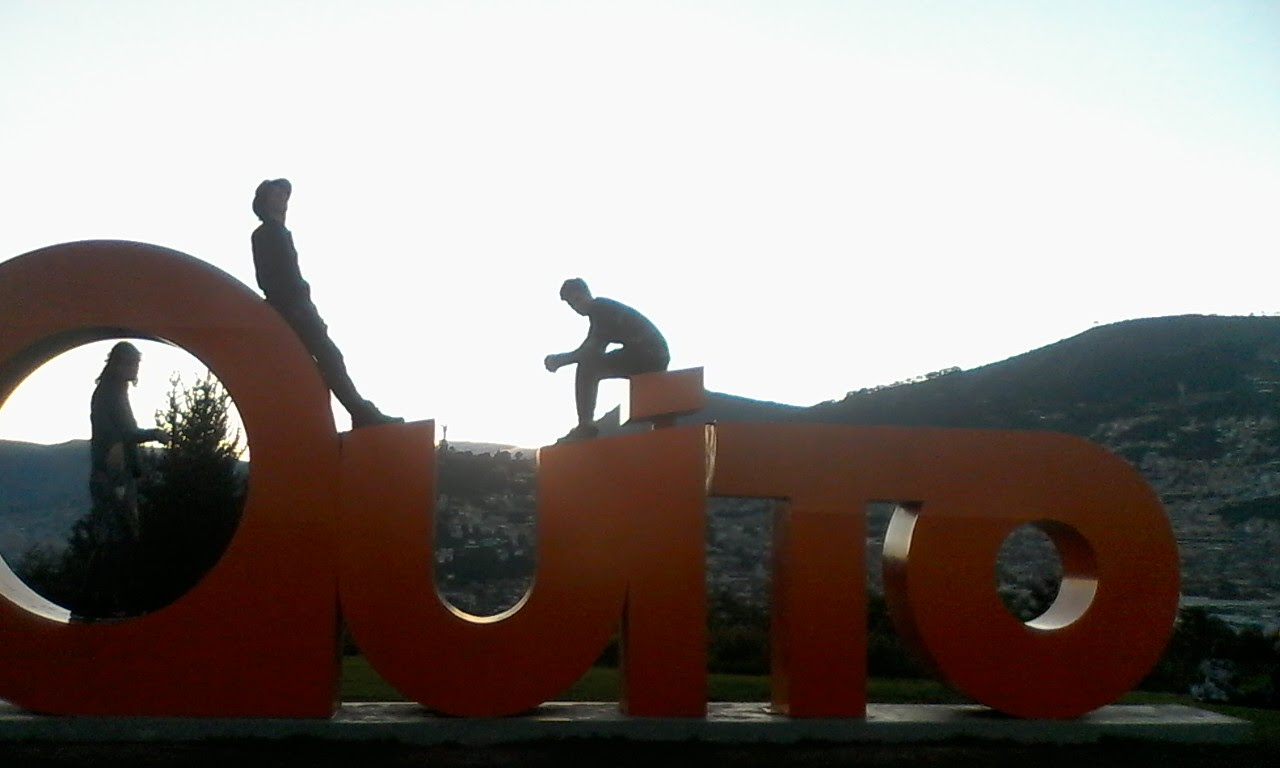
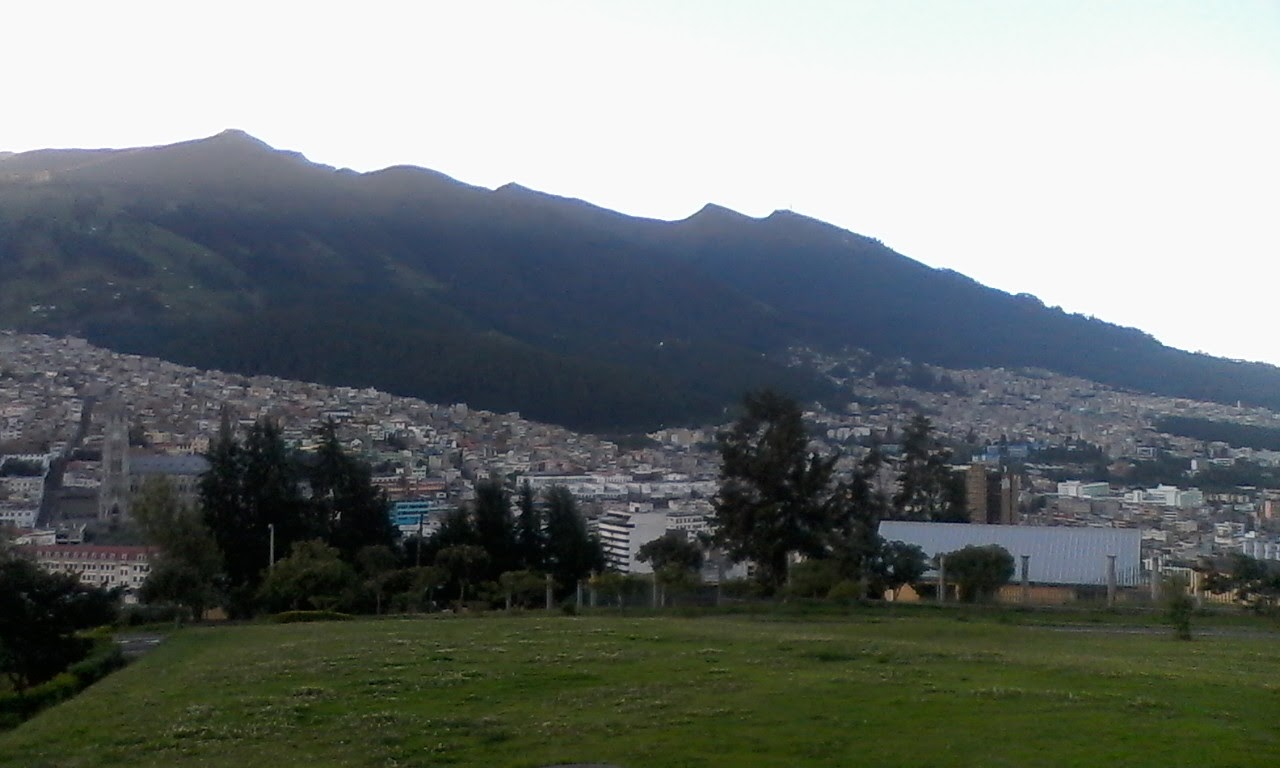
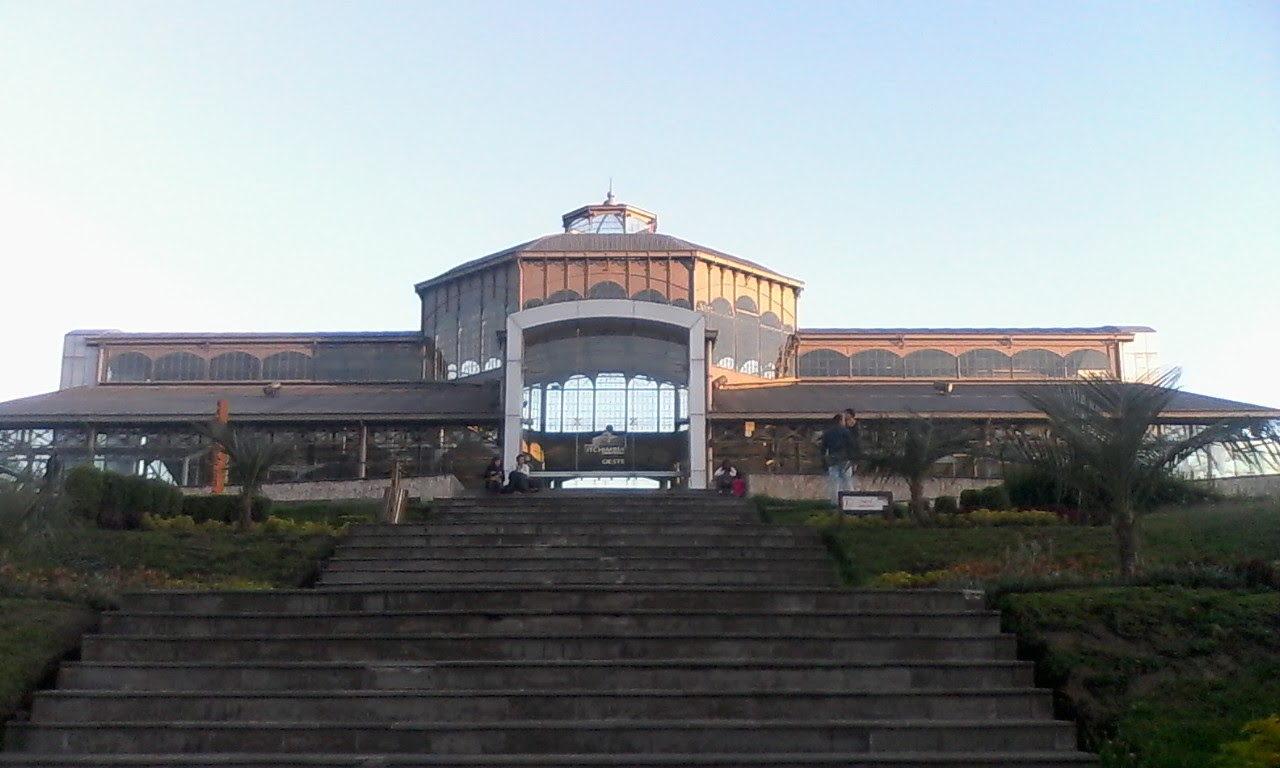
Local tip: End the day at Parque Itchimbía, on the hill east of the Old Town above San Blas. From the top you see the whole colonial center turn gold at sunset. It gets cold fast once the sun drops behind Pichincha, so bring a layer, and take a taxi back after dark.
Related guides
- Mitad del Mundo: the history and the monuments
- El Panecillo and the winged Virgin of Quito
- Where to stay in Quito
- Ingapirca, Ecuador’s largest Inca site
Plan it with us
Questions about getting around Quito? Drop by our office at Pedro Fermín Cevallos N6-78 y Olmedo, on the edge of the Old Town, message us on WhatsApp at +593 97 953 3832, or write to info@communitytravel.ec. Our local guides answer every day and can help you plan the rest of your Ecuador trip.
Frequently asked questions
When was Quito founded?
The Spanish city of San Francisco de Quito was established at its current site on December 6, 1534, by Sebastián de Benalcázar and 204 settlers, after Diego de Almagro founded it on paper near Riobamba on August 28, 1534. People had lived in the valley for thousands of years before that, and Quito was already an Inca capital.
Was Quito an Inca city?
Yes. The Inca conquered the region in the late 1400s under Túpac Yupanqui and Huayna Capac, and Quito became the northern capital of their empire. Very little survives above ground, because the city was burned and abandoned during the Spanish conquest in 1534. Inca sites such as Pucará de Rumicucho can still be visited nearby.
Why is Quito called the Light of America?
Quito earned the name ‘Luz de América’ because on August 10, 1809, its leaders formed one of the first governing juntas in Spanish America, an early step toward independence. The movement was crushed in 1810, but independence was won at the Battle of Pichincha on May 24, 1822.
Why is Quito a UNESCO World Heritage Site?
In 1978, Quito and Kraków became the first cities on UNESCO’s World Heritage List. Quito’s historic center was recognized as one of the best-preserved and least altered in Latin America, with its colonial street grid, monasteries and churches, and the art of the Quito School inside them.
What is the Quito School of art?
The Quito School, or Escuela Quiteña, was a colonial tradition of painting and sculpture that flourished between the 16th and 18th centuries. Indigenous and mestizo artists mixed European religious models with Andean details and colors. Bernardo de Legarda’s winged Virgin of 1734, on the main altar of San Francisco, is its most famous work.
How much of Quito’s history can you see in one day?
A lot. The main plazas, San Francisco, La Compañía, the Plaza Grande and La Ronda are all within walking distance in the Old Town. A three-hour walking tour covers the key sites, and you can add the free Museo Nacional for pre-Hispanic history and El Panecillo for the best view over the colonial center.