Quick answer: You can see Cotopaxi and Quilotoa from Quito as two separate day trips, as a 2-day tour with a night on the Avenue of the Volcanoes, or on your own by bus. Two days is the sweet spot: less driving per day, better acclimatization, and time to hike to Cotopaxi’s José Rivas refuge and down into Quilotoa’s crater.
We are Ecuadorian guides based in Quito’s Old Town, and Cotopaxi and Quilotoa are the two trips we run more than any others. This guide is the honest version of what we tell travelers at our front desk every morning: how far each place really is, what the altitude feels like, what each option costs as of 2026, and when doing it yourself makes more sense than booking a tour.
Cotopaxi vs Quilotoa: what is the difference?
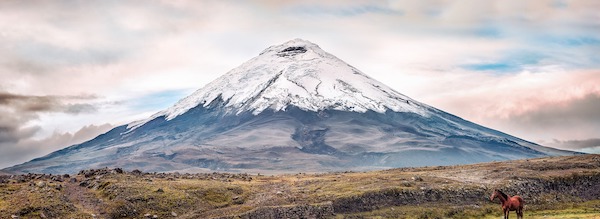
Cotopaxi (5,897 m) is the classic snow-capped cone you see on postcards of Ecuador. It sits inside Cotopaxi National Park, roughly 1.5 hours south of Quito. The standard visit is a drive up to the parking area at about 4,600 m, a steep hike to the José Rivas refuge at 4,864 m, and a stop at Limpiopungo Lagoon (about 3,800 m) on the high páramo grassland below.
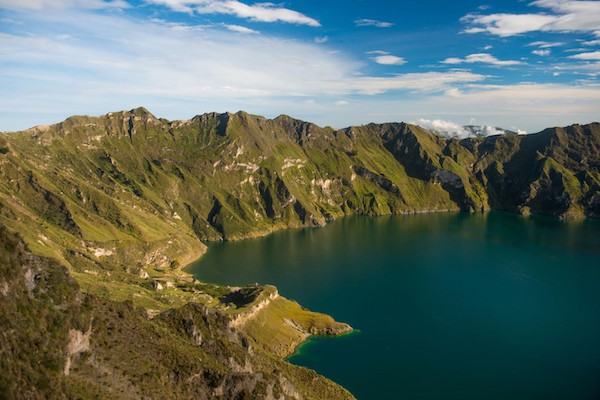
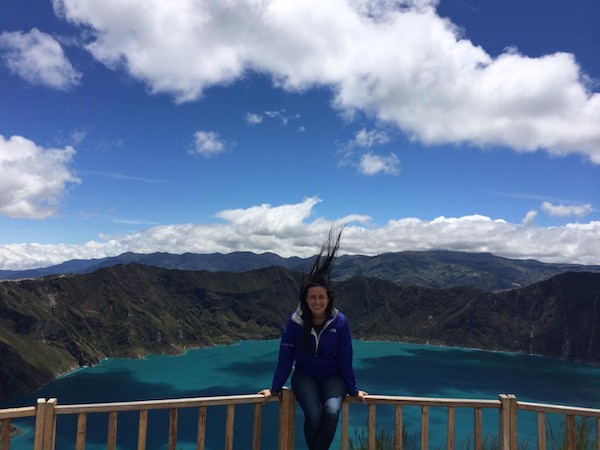
Quilotoa is a collapsed volcano whose crater filled with water, leaving a green-turquoise lake roughly 3 km wide. The rim sits at about 3,900 m, and the lake is around 400 m below it. You walk down a sandy trail to the shore and then, the hard part, back up. It sits in Kichwa farming country near Zumbahua.
How far are Cotopaxi and Quilotoa from Quito?
Both are south of Quito along the Pan-American Highway, the stretch known as the Avenue of the Volcanoes. Cotopaxi is close; Quilotoa is not.
- Quito to Cotopaxi National Park (south entrance): about 60 km, 1.5 hours by private vehicle, a little longer by bus plus a truck into the park.
- Quito to Quilotoa: about 180 km, 3.5 to 4 hours by private vehicle via Latacunga, Pujilí and Zumbahua. By public bus, count on 4 to 5 hours with the change in Latacunga.
- Cotopaxi to Quilotoa: about 2 to 2.5 hours by road, which is why an overnight in between works so well.
A Quilotoa day trip means roughly 7 hours in a vehicle. Squeezing both volcanoes into one day is possible with a private driver, but it means 10 to 12 hours on the road and little time on either. We do not recommend it.
Should you do Cotopaxi and Quilotoa in one day, two days, or on your own?
There are three realistic ways to do it. Here is how they compare, with prices as of 2026.
| Option | Time needed | Cost per person (2026) | What is included | Best for |
|---|---|---|---|---|
| Cotopaxi Bike & Hike day tour | 1 day (07:10 to ~17:00) | From $63 | Transport from Quito, bilingual guide, bike + helmet, lunch | Travelers with only one day for Cotopaxi |
| Quilotoa Crater Lake day tour | 1 day (07:15 to ~18:00) | From $57.50 + $2 community fee | Transport, bilingual guide, lunch, market and Tigua stops | Seeing Quilotoa without the bus changes |
| Both day tours on separate days | 2 days, sleeping in Quito | About $120.50 + $2 fee | As above, back in Quito each night | People who want to keep their Quito hostel |
| Cotopaxi & Quilotoa 2 Day Adventure | 2 days / 1 night | From $170 | Transport, guide, bike, lodge night, 1 breakfast, 2 lunches, 1 dinner | Most travelers: less driving, better acclimatization |
| Independent Cotopaxi | 1 long day | About $5 bus round trip + $20–50 truck/guide at the gate | Park entry is free; no meals or bike | Budget travelers comfortable with logistics |
| Independent Quilotoa | 1 very long day, or overnight | About $10–12 bus round trip + $2 fee + lodging if you stay | Only the bus and the entry | Travelers heading on to the Quilotoa Loop |
Our honest take: if you are on a tight budget and already comfortable with Ecuadorian buses, doing Quilotoa independently is easy and cheap. Cotopaxi is harder alone because buses cannot enter the park, so you need to hire a truck at the gate. If you have two days and want both volcanoes without the logistics, the 2-day trip gives you the most time on the trails for the least time in a van.
Cotopaxi & Quilotoa 2 Day Adventure · from USD 170 · 2 days / 1 night · departures Wed–Thu, Thu–Fri, Sat–Sun
Hike to the José Rivas refuge and bike down to Limpiopungo on day one, sleep in a lodge on the Avenue of the Volcanoes, then walk into the Quilotoa crater on day two. Meals, bike, guide and transport from Quito are included.
What is the Cotopaxi and Quilotoa 2 day tour like?
Day 1: Cotopaxi hike and bike
Pickup is at 07:10 at Plaza Foch in the New Town or 07:20 at Plaza San Blas in the Old Town. We drive south on the Pan-American, register at the park entrance and continue up the dirt road to the parking area below the refuge. From there it is about an hour of slow, zig-zag hiking on loose volcanic sand up to the José Rivas refuge at 4,864 m.
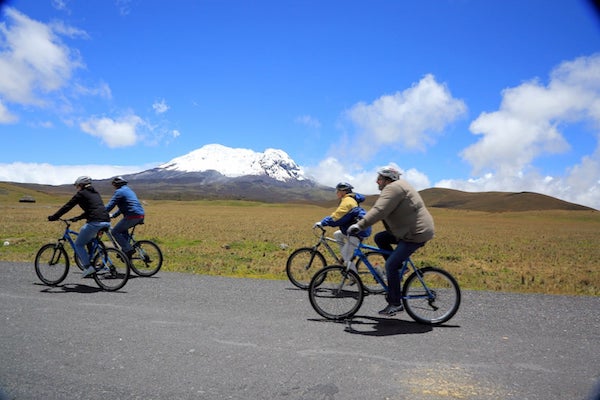
After the walk back down, you swap boots for a mountain bike and ride about an hour downhill across the páramo to Limpiopungo Lagoon, often passing wild horses and Andean lapwings. Lunch is included, then we continue to a lodge on the Avenue of the Volcanoes (Casa Sakiwa or similar) for dinner and the night. The shared room is standard; a private room is available on request.
Day 2: Quilotoa crater lake
After breakfast, pickup from the lodge is around 08:00 to 08:30. Depending on the day, we stop at an indigenous market (Saquisilí on Thursdays, Pujilí on Sundays), then drive through the Tigua valley, famous for its painted leather-and-wood folk art. At Quilotoa you pay the community entrance and walk down to the lake. Back at the rim you can hike up on your own feet or rent a mule. We are back in Quito around 18:00.
Local tip: Doing Cotopaxi first matters. Sleeping at around 3,000 m after a day touching 4,864 m helps your body adapt, and the Quilotoa climb back up the crater feels noticeably easier on day two than it would as a cold start from Quito.
What will you see at Cotopaxi National Park on a day trip?
A Cotopaxi national park day trip usually covers three things:
- The José Rivas refuge (4,864 m): a mountain hut used by climbers as the base for summit attempts. It serves hot drinks when open. The hike up from the parking area is only about 1 km, but you gain roughly 250 m at extreme altitude, so it takes 45 to 60 minutes.
- The glacier edge (around 5,000 m): on good days, fit and well-acclimatized hikers can continue about 30 to 45 minutes above the refuge toward the ice. Your guide will decide based on weather and how the group is feeling.
- Limpiopungo Lagoon (about 3,800 m): a flat, easy 2 km loop around a shallow lagoon with the volcano behind it and the jagged Rumiñahui peak to the side.
Park entry is free. You register with your passport at the gate. According to the park’s published schedule, vehicles can enter from about 08:00 to 15:00, so an early start is important both for access and for clear views.
Can you visit Cotopaxi without a guide or a tour?
Yes, for the park itself. You do not need a guide to walk around Limpiopungo or hike to the José Rivas refuge. The catch is transport: public buses drop you on the Pan-American Highway near the south entrance, and buses are not allowed inside the park. You either drive your own vehicle or hire one of the local guides who wait at the entrance with pickup trucks.
We cover the independent route step by step, including which bus to catch from Quitumbe terminal and what the truck drivers charge, in our guide on how to travel to Cotopaxi independently.
Can you climb Cotopaxi without a guide?
No. Climbing to the summit (5,897 m) is a different trip altogether. Since the park reopened summit climbs in 2024 after the 2022–2023 eruptive period, ascents are only allowed through licensed tour operators or registered mountaineering clubs, with a certified mountain guide, glacier gear and a registered quota for the refuge night. Primicias reported the park’s conditions for the summit reopening, and rules can change with volcanic activity, so check the Instituto Geofísico updates before you commit. A summit climb also needs several days of acclimatization first; it is not something to add onto a day trip.
How hard is the Quilotoa hike down to the lake and back up?
Going down is easy on the lungs but slippery on the legs. The trail is steep, sandy and dusty, and most people reach the shore in 30 to 45 minutes. Coming back up is where the altitude hits: you climb roughly 400 m starting from about 3,500 m, and 1 to 1.5 hours is normal. Walk slowly and stop often.
If your knees or lungs say no, mules and horses wait at the shore to carry you up for around $10. At the lake you can rent a kayak for around $5. Swimming is not allowed because of volcanic gases and cold water.
If you want more than the short down-and-up, the full rim hike is 10 to 12 km and takes 4 to 6 hours, with the steepest, most exposed sections on the far side. That is also where the multi-day Quilotoa Loop begins or ends, walking between villages like Chugchilán, Isinliví and Sigchos.
Local tip: Quilotoa is very windy after midday and clouds often fill the crater by early afternoon. Take your photos from the main viewpoint as soon as you arrive, then hike down.
Quilotoa Crater Lake · from USD 57.50 · 1 day · Tuesday, Thursday, Sunday
Only have one free day? Our Quilotoa day trip includes a local market stop on Thursdays and Sundays, the Tigua art community and time to hike down to the lake.
How do you get from Quito to Quilotoa on your own?
A Quilotoa day trip from Quito by public bus is doable but long. The usual route in 2026:
- Take a bus from Quitumbe terminal in south Quito to Latacunga: about 2 hours, around $2.50.
- In Latacunga, change to a bus toward Zumbahua and Quilotoa: about 2 hours, around $2.50–3.
- Pay the community entrance at the crater: $2 per person has been the standard fee for years, but confirm on arrival.
Afternoon return buses from Quilotoa are limited, so ask about the last departure as soon as you arrive. Many independent travelers solve that by sleeping at the crater or in Latacunga and continuing on the Quilotoa Loop the next morning.
When is the best time to visit Cotopaxi and Quilotoa?
You can visit all year, but the weather in the Andes changes by the hour. Some patterns hold:
- June to September: the driest months and usually the clearest views of Cotopaxi’s cone. Also the windiest, so pack a real windproof layer.
- December and January: a shorter spell of fairly good weather, busy with holiday travelers.
- February to May and October to November: more rain and cloud, especially in the afternoon. Mornings can still be spectacular.
Whatever the month, mornings are clearer than afternoons, which is why every good Cotopaxi and Quilotoa tour starts early. At the refuge, expect temperatures near freezing and possible snow or sleet at any time of year. At Quilotoa, strong sun and cold wind often arrive at the same time.
How do you deal with the altitude at Cotopaxi and Quilotoa?
Quito is already at 2,850 m, but the Cotopaxi refuge is over 2,000 m higher. Headaches, breathlessness and nausea are common at that height, and a few travelers stop before the refuge. That is fine; the parking area and lagoon views are still worth it.
- Spend at least two nights in Quito before either trip.
- Drink plenty of water, go easy on alcohol the night before, and eat a real breakfast.
- Walk slowly from the first step. The “rest step” pace your guide uses is not for show.
- If a headache becomes severe or you feel confused or dizzy, go down. Symptoms usually improve quickly with lower altitude.
For the full breakdown, including coca tea, medication to ask your doctor about and warning signs, read our guide to preventing and treating altitude sickness (soroche) in Quito.
Local tip: Bring a bit of cash in small bills. The refuge café, the Quilotoa entrance, mule rides, kayaks, bathrooms and the Tigua artists are all cash only, and $20 notes are hard to break in the highlands.
What should you pack for Cotopaxi and Quilotoa?
You will go from mild sun to freezing wind in the same morning. Dress in layers:
- Warm base layer and a fleece or light down jacket
- Windproof and waterproof outer jacket
- Hat, gloves and a buff or scarf (the Cotopaxi wind is serious)
- Hiking shoes with good grip for loose sand on both trails
- Sunglasses and SPF 50 sunscreen; UV at nearly 5,000 m is intense even through cloud
- At least 1.5 liters of water and some snacks
- Passport (or a copy) for the park registration
- Small bills for fees and extras
For the Amazon and Galápagos too, see our complete Ecuador packing list.
How do Cotopaxi and Quilotoa fit into an Ecuador itinerary?
Both work best right after your first days in Quito, once you have started to acclimatize. A common plan is two days exploring the city (starting with a perfect day in Quito’s Old Town), then Cotopaxi and Quilotoa, then south to Baños or on to the Quilotoa Loop. If you are traveling south anyway, you can ask to be dropped in Latacunga instead of returning to Quito.
For full 7, 10 and 14-day routes, see our Ecuador itinerary guide, and for a realistic daily budget, our Ecuador trip cost guide.
Cotopaxi Bike & Hike · from USD 63 · 1 day · Wednesday, Friday, Saturday, Sunday
Short on time? Hike to the José Rivas refuge, then ride a mountain bike downhill to Limpiopungo Lagoon and be back in Quito by late afternoon. Transport, guide, bike and lunch included.
Plan it with us
Our office is at Community Hostel, Pedro Fermín Cevallos N6-78 y Olmedo, on the edge of Quito’s Old Town. Not sure whether one day, two days or going independently fits? Message us on WhatsApp at +593 97 953 3832 (0979533832 in Ecuador) or email info@communitytravel.ec. We will tell you honestly what fits your dates, even when a bus ticket is all you need.
Frequently asked questions
Can you do Cotopaxi and Quilotoa in one day from Quito?
Technically yes, with a private driver, but it means 10 to 12 hours on the road and only short visits to each volcano. Cotopaxi is about 1.5 hours from Quito and Quilotoa about 3.5 to 4 hours, with 2 hours between them. We recommend two separate day trips or a 2-day tour with a night on the Avenue of the Volcanoes instead.
How much does a Cotopaxi and Quilotoa tour cost in 2026?
With Community Adventures, the Cotopaxi Bike & Hike day tour starts at USD 63, the Quilotoa Crater Lake day tour at USD 57.50, and the Cotopaxi & Quilotoa 2 Day Adventure at USD 170 including a lodge night, meals, bike and guide. Add the Quilotoa community entrance fee, which has been $2 per person, and optional extras like a mule ride (about $10).
Is there an entrance fee for Cotopaxi National Park?
No. Entry to Cotopaxi National Park is free for all visitors, but you must register at the gate with your passport or ID. Vehicles are generally admitted from about 8:00 to 15:00. Buses cannot enter the park, so independent travelers need their own vehicle or must hire a local guide’s pickup truck at the entrance.
Do you need a guide to hike to the José Rivas refuge on Cotopaxi?
No guide is required to hike from the parking area to the José Rivas refuge at 4,864 m or to walk around Limpiopungo Lagoon. A certified mountain guide and a licensed operator are required only for climbing onto the glacier toward the 5,897 m summit, which also needs a registered quota and proper glacier equipment.
How long does it take to hike down to Quilotoa lake and back up?
Most people walk down to the lake shore in 30 to 45 minutes on a steep, sandy trail. The climb back up gains about 400 m at altitude and usually takes 1 to 1.5 hours. If you prefer not to walk up, mules and horses wait at the shore and charge around $10 for the ride to the rim.
What is the best month to visit Cotopaxi?
June to September is usually the driest period with the clearest views of Cotopaxi’s cone, though it is also the windiest. December and January can also be good. It rains more from February to May and in October and November. In any month, mornings are clearer than afternoons, so start early.
Will I get altitude sickness at Cotopaxi or Quilotoa?
Mild symptoms such as headache or shortness of breath are common near the José Rivas refuge at 4,864 m, and possible when climbing out of the Quilotoa crater at about 3,900 m. Spend at least two nights in Quito first, drink plenty of water, walk slowly and descend if symptoms become severe.