Quick answer: For a first visit, stay in the Old Town, ideally on its quieter eastern edge around San Blas, so you can walk to the plazas, churches and markets by day. Choose La Floresta for a calm, local neighborhood with cafés, La Mariscal for nightlife, and La Carolina or Cumbayá for business trips, families or longer stays.
We are a team of Ecuadorian guides who live and work in Quito, and every week we pick up travelers from hostels and hotels all over the city before sunrise. So we know which neighborhoods feel good at night, which make early pickups painless, and which leave you in a taxi all day.

How is Quito laid out, and why does it matter where you stay?
Quito is a long, narrow city in an Andean valley at about 2,850 m, stretching roughly 40 km north to south but only a few kilometers wide.
For visitors, three zones matter. The Old Town (Centro Histórico) in the middle, which was one of the first two places ever listed as a UNESCO World Heritage Site in 1978. The New Town just north of it, with La Mariscal, La Floresta and González Suárez. And the modern north around Parque La Carolina. East of the city, down a steep drop, are the warmer valley suburbs of Cumbayá and Tumbaco, which sit on the way to the airport.
The good news: Quito’s Metro Line 1 now links the Old Town (San Francisco station) with El Ejido, La Carolina and Iñaquito. According to the Metro de Quito, the full 15-station line takes around 30 minutes end to end, and a ride costs $0.45.
Quito neighborhoods compared at a glance
Distances below are approximate road distances to Plaza Grande, the main square of the Old Town. Price levels are for typical traveler accommodation: $ means dorms from around $10–15 and simple private rooms, $$ means comfortable mid-range hotels, $$$ means boutique and upscale stays.
| Neighborhood | Best for | Safety at night | Walkability | Price | Distance to Old Town |
|---|---|---|---|---|---|
| Centro Histórico (Old Town core) | Sightseeing, history, first visits | Busy by day; quiet streets empty after about 8–9 pm | Excellent by day | $–$$$ | 0 km |
| San Blas / eastern edge of Old Town | First visits, backpackers, early tour pickups | Calmer residential feel; use a taxi or app late | Excellent (5–10 min to Plaza Grande) | $–$$ | under 1 km |
| La Ronda | Atmosphere, weekend evenings, couples | Lively on weekend nights; don’t wander beyond it | Good | $$ | about 0.5 km |
| La Mariscal (Plaza Foch) | Nightlife, social travelers, tour agencies | Mixed; stick to busy streets near Plaza Foch | Good | $–$$ | about 3 km |
| La Floresta | Cafés, local life, longer stays | One of the calmer central options | Good | $$ | about 4 km |
| González Suárez / Guápulo | Views, quieter upscale stays | Generally calm; Guápulo’s steep lanes are empty at night | Fair (hills and stairs) | $$–$$$ | about 4–5 km |
| La Carolina / Quicentro | Business, families, malls, the Metro | Main avenues fine; avoid the park after dark | Good along avenues | $$–$$$ | about 6–7 km |
| Cumbayá / Tumbaco | Long stays, warmer weather, near the airport | Suburban and calm | Good in the center, car-oriented beyond | $$–$$$ | about 13–15 km (30–45 min) |
A note on safety before we go further: most problems visitors have in Quito are phone snatching and pickpocketing, not violent crime, and they cluster on empty streets after dark. The UK government’s travel advice specifically mentions taking care in the Old Town and at transport hubs, and warns against hailing unregistered taxis. Our full, honest breakdown is in our guide to whether Ecuador is safe in 2026.
Is staying in Quito’s Old Town a good idea?
Yes, especially if you only have two or three nights. You wake up next to the Basilica, the Presidential Palace, the Compañía church and the San Francisco market, and you can see most of the essentials on foot. Our one-day Old Town itinerary is built around exactly that.
Centro Histórico: the Old Town core
Vibe: colonial streets, churches on every corner, office workers and street vendors by day. Best for: first-time visitors and culture lovers. Prices run from budget hostels to converted colonial mansions.
- Pros: walk to almost every major sight, great cheap lunches (almuerzos) in markets, easy Metro and trolleybus links north.
- Cons: the core empties fast in the evening, it’s noisy by day, and some streets on the western and southern side feel rough after dark.
- Safety at night: fine around the main plazas while people are around; after about 8–9 pm we take a taxi or app ride even for a few blocks. Avoid the streets around the La Marín bus hub at night.
San Blas and the eastern edge of the Old Town
Vibe: a more residential corner of the historic center, with the small Plaza San Blas and its church, family bakeries and fewer tour groups. Best for: travelers who want the Old Town on foot but a quieter base. This is where our own office and Community Hostel are, on Pedro Fermín Cevallos N6-78 y Olmedo.
- Pros: 5–10 minutes’ walk to Plaza Grande, close to the Itchimbía park viewpoint, and it’s the second pickup point (07:20, Plaza San Blas) for our Cotopaxi day trips.
- Cons: fewer restaurants open late than in the New Town, and some uphill streets.
- Safety at night: calmer than the western Old Town, but the same rule applies: short walks on lit streets, app taxis for anything longer.

La Ronda
Vibe: a restored colonial street of balconies, craft shops, canelazo stands and live music. Best for: couples and anyone who wants a pretty base for a night or two. Lodging here is mostly small boutique-style places, so it sits in the mid-range.
- Pros: the most atmospheric evening spot in the Old Town, especially Friday and Saturday.
- Cons: quiet on weekday nights, music can run late on weekends, and the street is short, so the area just outside it feels very different.
- Safety at night: La Ronda itself has police presence and crowds on weekends. Don’t walk from it up toward El Panecillo or into empty side streets; take a car.
Local tip: If you want to see the Virgin of El Panecillo, go by taxi in daylight and ask the driver to wait. The stairs up from the Old Town are the one walk we tell every guest to skip. More in our Panecillo guide.
Free Walking Tour Quito · Free (tip-based) · 3 hours · Mon–Sat 10:30 & 14:30, Sun 10:30
It starts at our hostel on the edge of the Old Town and covers the plazas, colonial churches, a market and a chocolate tasting with an Ecuadorian guide. A great first-morning orientation wherever you’re staying.
Is La Mariscal safe to stay in?
It depends on which street and what time. La Mariscal, the old “Gringolandia”, is Quito’s traditional backpacker and nightlife district, centered on Plaza Foch. It has the densest mix of bars, restaurants, hostels and travel agencies in the city.
Ireland’s Department of Foreign Affairs travel advice notes that La Mariscal “can be particularly dangerous”, and in our experience the risk is real on quiet side streets late at night, when people walk back from bars with phones out.
- Vibe: busy, international, loud on Thursday to Saturday nights.
- Best for: social travelers who want nightlife on the doorstep.
- Pros: lots of food options, easy to meet people, and Plaza Foch is the 07:10 pickup point for our Cotopaxi tours.
- Cons: noise, a slightly run-down feel on some blocks, and it’s about 3 km from the Old Town sights.
- Safety at night: stay on the busy, well-lit streets around Plaza Foch, and book a car through an app even for short trips home after midnight.
Our honest take: fine if nightlife is your priority, but not our default first-visit base.
What about La Floresta, González Suárez and Guápulo?
La Floresta
Vibe: a leafy, residential neighborhood just east of La Mariscal with independent cafés, street art, small restaurants and an arthouse cinema culture. Best for: longer stays, remote workers and travelers who prefer local life to party streets.
- Pros: feels lived-in and relaxed, good coffee and food, walkable to La Mariscal’s restaurants without sleeping above them.
- Cons: fewer budget beds, and you’ll ride about 15 minutes to reach the Old Town.
- Safety at night: one of the calmer central options. Normal precautions still apply on empty streets.
González Suárez and Guápulo
González Suárez is the ridge-top avenue above the valley, lined with apartment towers and larger hotels with big views east. Below it, Guápulo is a steep, village-like cluster of lanes around its 17th-century sanctuary.
- Best for: couples and travelers who want views and quiet.
- Pros: calm, attractive and close to La Floresta.
- Cons: hills and stairs everywhere, limited dining in Guápulo itself, and you’ll depend on taxis.
- Safety at night: González Suárez is generally calm. Guápulo’s lanes get dark and empty, so arrive by car.
Should you stay in La Carolina or Cumbayá?
La Carolina / Quicentro
This is modern Quito: office towers, the big Parque La Carolina, shopping malls like Quicentro, and international chain hotels. Best for: business travelers, families and anyone who wants familiar comforts.
- Pros: clean, organized, lots of services, and direct Metro access (Carolina and Iñaquito stations) to the Old Town in roughly 15 minutes.
- Cons: little character, and it’s the farthest central area from the historic sights.
- Safety at night: main avenues are fine; avoid walking through the park after dark.
Cumbayá / Tumbaco
These valley suburbs sit roughly 500 m lower than the Old Town, so they’re noticeably warmer, and they’re closer to the airport. Cumbayá has a small plaza, a university crowd and plenty of restaurants, and the Chaquiñán, a roughly 20 km path along an old railway line, is great for walking and cycling.
- Best for: long stays, families, remote workers, and a last night before an early flight.
- Pros: calm, green, sunny, and the lower altitude helps some people feel better on arrival.
- Cons: 30–45 minutes by car to the Old Town depending on traffic, and early tour pickups in the city mean an extra ride.
- Safety at night: suburban and calm, with the usual care on unlit streets.
Where would we stay on a first visit to Quito?
On the edge of the Old Town, around San Blas:
- You walk to the main sights. Plaza Grande, the Compañía church, San Francisco and the Central Market are all within a 5–15 minute walk.
- Tour logistics are easy. Our Cotopaxi Bike & Hike stops at Plaza San Blas at 07:20, and the free walking tour starts at our door.
- It’s quieter than the core, so you get sleep without losing the location.
- It’s easy to leave. San Francisco Metro station puts La Carolina and the north within reach for dinner, and a taxi to La Floresta or La Mariscal is short.
Staying a week or more? Split it: a few nights in the Old Town, then La Floresta or Cumbayá.
Local tip: Quito sits at about 2,850 m. Book something without steep stairs for your first night if you can, walk slowly, drink water and go easy on alcohol for the first 24 hours. Our altitude sickness guide has the full plan.
What is Community Hostel Quito like?
We should be upfront: Community Hostel Quito is part of our own group, Community Travel Group, so take our enthusiasm with that in mind. It’s in the historic center at Pedro Fermín Cevallos N6-78 y Olmedo, a short walk from Plaza Grande, the Basilica, La Ronda and the Central Market, and our travel agency office is in the same building.
- Rooms: 4-bed and 6-bed mixed dorms plus private rooms with queen beds.
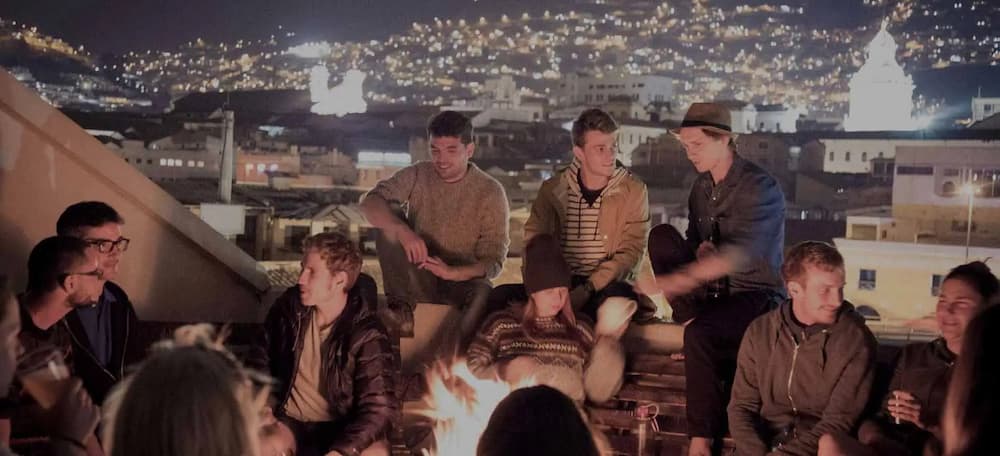
- Social life: a rooftop, family-style dinners and regular events. It’s a social hostel, not a silent retreat.
- Practical: guest kitchen, hot showers, Wi-Fi, and room door codes.
- Tours: the free walking tour leaves from here, and Cotopaxi pickups are a short walk away at Plaza San Blas.
Who it’s not for: if you want total quiet, a hotel with room service, or a base in the nightlife district, look at La Floresta, González Suárez or La Mariscal instead. Check current rates directly on the hostel’s website.
How much does accommodation in Quito cost in 2026?
A rough guide for 2026 (holidays cost more):
- Hostel dorm bed: from about $10–15 a night.
- Private room in a hostel or simple guesthouse: roughly $30–60.
- Mid-range hotel: roughly $60–120.
- Boutique and upscale: from about $130 and up, most of them in the Old Town, González Suárez and La Carolina.
For how lodging fits into a full trip budget, see how much a trip to Ecuador costs in 2026.
How do you get to your neighborhood from the airport?
Mariscal Sucre International Airport is in Tababela, well east of the city. The airport’s own transport page says the drive to the north, south or center of Quito takes 35–50 minutes in moderate traffic, and it can be longer at rush hour. Cumbayá and Tumbaco are on the way, so they’re noticeably quicker.
Use the official taxis from the arrivals area or a pre-booked transfer, especially at night. We explain every option, with current prices, in how to get from the airport to Quito.
Local tip: Landing late with an early tour the next morning? Tell your driver the exact address and cross street (in Quito, addresses like “N6-78 y Olmedo” include the nearest corner). It saves a lot of circling in the one-way streets of the Old Town.
Does where you stay affect day trips from Quito?
More than people expect. Most day tours leave between 6:30 and 7:30 am. Our Cotopaxi Bike & Hike picks up at Plaza Foch (07:10) and Plaza San Blas (07:20), so both the New Town and the Old Town work well. Staying in Cumbayá or far north means arranging an early taxi to one of those points.
Cotopaxi Bike & Hike · From USD 73 pp · 1 day · Wed, Fri, Sat, Sun
Pickup at Plaza Foch at 07:10 or Plaza San Blas at 07:20, then a hike toward the José Rivas refuge and a downhill bike ride to Limpiopungo Lagoon, lunch included.
Once you’ve picked your base, see our list of the best things to do in Quito, and if Quito is the start of a bigger trip, our 7, 10 and 14-day Ecuador itineraries show how many nights to plan here.
Plan it with us
Not sure which neighborhood fits your dates, budget or tour plans? Message our local team on WhatsApp at +593 97 953 3832 or email info@communitytravel.ec. We’ll tell you honestly where we’d stay, and help you line up the walking tour, Cotopaxi, Quilotoa or anything else from our tour list.
Frequently asked questions
What is the best area to stay in Quito for first-time visitors?
The Old Town, ideally its quieter eastern edge around San Blas. You can walk to Plaza Grande, the Basilica, La Compañía and the Central Market in 5 to 15 minutes, and San Francisco Metro station connects you to the north. Choose La Mariscal instead if nightlife is your priority, or La Floresta if you prefer a calm neighborhood with cafés.
Is La Mariscal safe for tourists?
La Mariscal is fine on its busy, well-lit streets around Plaza Foch, but it has the most mixed reputation of Quito’s tourist areas, and Ireland’s official travel advice calls it particularly dangerous. Most incidents are phone snatching and robberies on quiet side streets late at night. Stay near the plaza, keep your phone away, and use an app taxi to get home after dark.
Is it safe to stay in Quito’s Old Town?
Yes, with sensible habits. The Old Town is busy and well policed by day, but many streets empty after about 8 or 9 pm. Walk short distances on lit streets around the main plazas, take a registered or app taxi after dark, avoid the La Marín bus area at night, and never walk up to El Panecillo. The quieter San Blas edge feels calmer than the western core.
Is La Floresta a good place to stay in Quito?
La Floresta is one of our favorite bases for longer stays. It is a leafy residential neighborhood east of La Mariscal with independent cafés, small restaurants and street art, and it is calmer at night than the nightlife district. The trade-off is fewer budget beds and a roughly 15-minute ride to the Old Town sights.
Should I stay in Cumbayá or in Quito city?
Stay in the city for a short sightseeing trip. Cumbayá sits roughly 500 m lower, so it is warmer, calmer and closer to the airport, which suits families, long stays and a last night before an early flight. But it is 30 to 45 minutes by car from the Old Town, and early tour pickups in the city mean an extra ride.
How many nights should I stay in Quito?
Two to three nights covers the Old Town, a viewpoint and one neighborhood like La Floresta, and gives your body time to adjust to 2,850 m before hiking. Add nights for day trips such as Cotopaxi, Quilotoa, Otavalo or Mindo, which most travelers do from a Quito base. A week works well if you split it between two neighborhoods.
Where do Community Adventures tours pick up in Quito?
Our Cotopaxi Bike and Hike tour picks up at Plaza Foch in the New Town at 07:10 and at Plaza San Blas in the Old Town at 07:20. The Free Walking Tour starts at Community Hostel, Pedro Fermín Cevallos N6-78 y Olmedo; arrive 10 minutes early. If you stay in Cumbayá or the far north, plan a taxi to one of these points.