Quick answer: Vilcabamba is a small valley town at about 1,600 m, 45 km south of Loja. It became famous in the 1970s for residents said to live past 120, but a 1979 study found no verified centenarians; ages had been exaggerated. What is real: a mild climate, good hiking and a slow pace. Loja is an hour away by bus.
Updated September 2026 by our local guides in Quito: we added how to get to Vilcabamba via Loja, what later research found about the longevity claims, and what there is to do in the valley today.
Vilcabamba at a glance (2026)
| Topic | What to know (as of 2026) |
|---|---|
| Where | Loja province, southern Ecuador, about 45 km south of Loja city, ~1,600 m |
| Quito to Loja by air | About 50 min to Loja’s airport at Catamayo, roughly 2 flights a day (LATAM and Avianca), then about 45 min by taxi or shuttle to Loja |
| Quito to Loja by bus | From Terminal Quitumbe, about 12–14 h overnight, around $24 (Cooperativa Loja) |
| Loja to Vilcabamba | Buses and shared taxis from Loja’s main terminal roughly every 30 min, about 1 h, around $1–2; private taxi around $30 |
| Climate | Mild, spring-like most of the year; the dry season is roughly June to November |
| What to do | Hike Cerro Mandango, walk or ride horses in the valley, day hikes in Podocarpus National Park |
| How long | 2–4 nights, usually as part of a trip through southern Ecuador or overland to Peru |
Author: APRILHOLLOWAY
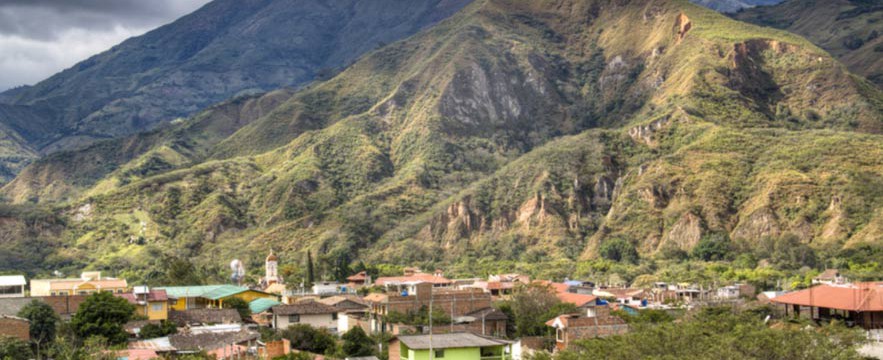
Tucked away in the Andean slopes of Ecuador, lies the quiet and picturesque village of Vilcabamba. Known to many as the ‘Valley of Longevity’, Vilcabamba has a reputation for being home to one of the highest concentrations of exceptionally old people, including numerous centenarians and a number of residents apparently reaching 140 years.
The name ‘Vilcabamba’ derives from the indigenous Quichua “huilco pamba”, meaning Sacred Valley. Originally a retreat for Inca rulers, it also became known as the ‘Playground of the Inca’. Inca royals travelled to the valley to renew and refresh their health, and it’s no wonder they chose Vilcabamba as their destination – the area is blessed with pristine water, pure air, rich soil, and a permanent Spring-like climate, where fruits, vegetables, and medicinal plants thrive all year round.
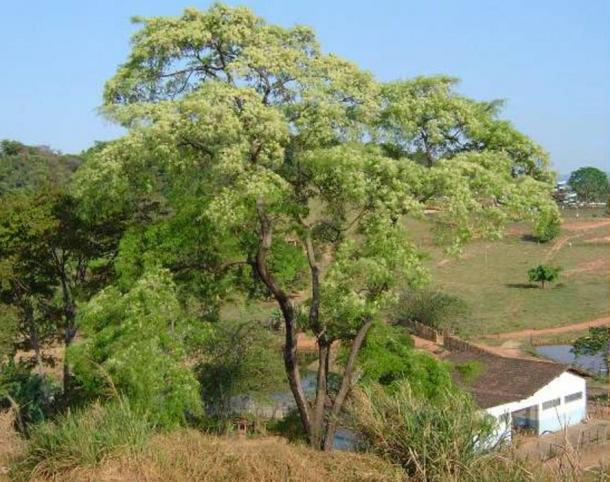
The Quichuan word ‘huilco’ also refers to a sacred tree found in the valley. The Anadenanthera colubrine tree (known also as Willka, Vilca or Huilca), is considered to be a treasure in Ecuador and is deemed to be holy among the Quichuan. Its leaves are used to treat respiratory ailments and asthma and the tree is also valued for its ability to bring back pristine oxygen and block pollutants in the air, which many believe is a contributing factor to the residents’ good health and longevity.
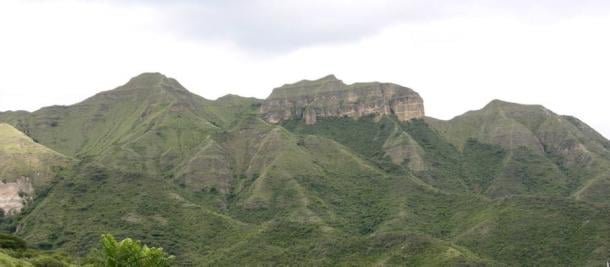
Vilcabamba is overlooked by a mountain called El Mandango, ‘the Sleeping Inca’. Local legend says that the spirit of the mountain protects the area from earthquakes, volcanoes, and other natural disasters.
The Sacred Valley was peacefully inhabited for centuries with very little contact from the wider world. However, in 1973, Dr Alexander Leaf of Harvard Medical School drew international attention to Vilcabamba following a cover story for National Geographic Magazine about the residents’ longevity. Two books further enhanced the town’s reputation. In 1975, Dr. David Davies, an English gerontologist, published ‘The Centenarians of the Andes’ about his research in Vilcabamba, and in 1976, popular author Grace Halsell published ‘Los Viejos: Secrets of Long Life from the Sacred Valley’.
Since then, news (and rumors) of the longevity and incredible health of ‘Los Viejos’ (The Old Ones) spread far and wide. Mixed in with scientific reports of good health and old age, were stories about the people of Vilcabamba being immune to death. It was said that the Grim Reaper passed by the valley but never entered it. Travel magazines began referring to Vilcabamba as ‘Shangri La’, a place where magic happens, ‘The Land of Eternal Youth’, ‘The Lost Gardens of Eden’ and the ‘Isle of Immunity’. Scientists and reporters began flocking to the quaint little village, featuring elderly locals on Ripley’s Believe It or Not and releasing reports in National Geographic, Reader’s Digest, and other major media outlets.
Old Age in Vilcabamba
What later research found: The 1970s census figures and claimed ages of 120 to 140 were never confirmed. In 1979, Richard Mazess and Sylvia Forman published a study of baptism records and family histories in the Journal of Gerontology. They found no verified centenarians and concluded that ages had been systematically exaggerated, partly because relatives shared the same names. Their conclusion is quoted at the end of this article.
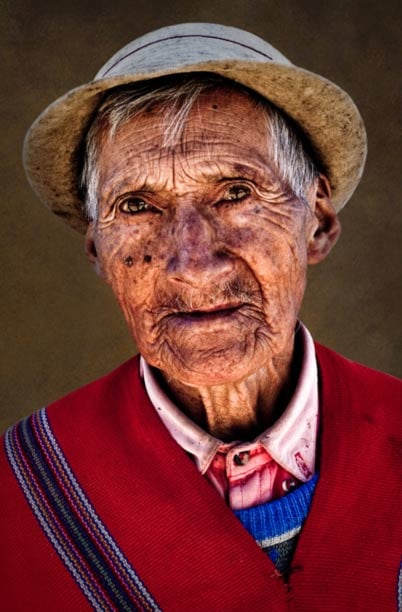
When Dr. Alexander Leaf visited Vilcabamba in 1973, along with Dr. Harold Elrick of the University of California at San Diego, and a group from the University of Quito, they found that many of the residents reported their age at over 100 years old, and a few stated their age as being over 140 years. This was apparently confirmed by birth and baptismal records.
A census in Loja (the region in which Vilcabamba is located) the following year appeared to back up this information. Out of a total population of 819 people at the time, 9 people were older than 100 years, one man, Miguel Carpio, said he was 123, and another man, Jose David, reported his age as 142 years. This meant that Vilcabamba had a rate of 1,100 centenarians per 100,000 population, compared to only 3 per 100,000 in the U.S.
Good health in the Sacred Valley
2026 note: The protected area above the valley is Podocarpus National Park, not a national forest. No controlled study has shown that Vilcabamba’s water or plants extend life. What visitors actually experience is a mild climate, clean air, and an active, walking-based daily life, which is pleasant but is not unique to this valley.
The scientific team led by Dr Leaf found that the residents of Vilcambamba had very low cholesterol and there was a virtual absence of heart disease and chronic illness. Later research showed that the retinas of the oldest residents were comparable to those of 45 year-olds.
In 1981, the Ecuadorian government hired medical journalist Dr. Morton Walker to study the residents. In his book, “The Secret to a Youthful Long Life”, Dr. Walker reported on the good health of the elderly villagers, which he attributed to the mineral rich water in Vilcabamba. The water flows into the valley from the Podocarpus National Forest, a protected Ecuadorian regional preserve which claims to have pre-Ice Age microorganisms and one of the world’s few remaining pristine rainforests.
British biochemist, Dr Richard Laurence Millington Synge, a Nobel Chemistry Prize winner and the man who discovered amino acids, stated that there are remarkable medicinal qualities to be found in the plant life in Vilcabamba, particularly with regards to their anti-oxidant properties.
More
- Did Ancient People Really Have Lifespans Longer Than 200 Years?
- The life expectancy myth, and why many ancient humans lived long healthy lives
- Immortality, the Elixir of Life and the Food of the Gods
Age Exaggeration?
While it is clear that the residents of Vilcabamba experience optimal health, a number of skeptics have come forward to challenge the incredible age claims of the residents.
According to The Bewildering History of the History of Longevity by Peter Laslett, “geographical variation in the incidence of long life is no doubt a reality but better general survival does not demonstrably raise the probability of extreme ages and systematic, skeptical analysis of these confidently asserted propositions has condemned them as entirely baseless.”
Indeed, a few inconsistencies started to appear in age reports following Dr Leaf’s initial research. For example, in 1971 he had met a man who said he was 122 years old. However, when Dr Leaf returned to Vilcabamba in 1974, the same man claimed to be 134 years. This tendency to exaggerate age was found to be linked to a cultural trend to treat the elderly with great honor – the older they were, the more respect they were given. Although this trend had been around for centuries, Dr Leaf theorized that the international publicity and rise in tourism, may have encouraged the villagers’ exaggerations.
Dr Leaf acquired the help of Dr. Richard Mazess of the University of Wisconsin Madison and Dr. Sylvia Forman of the University of California Berkeley to investigate the correct ages of Vilcabamba’s elderly population. This research revealed a problem with checking ages against birth and baptismal records – many family members carried the same first and last name. This meant that the birth date of an identically named uncle or father appeared to confirm the extreme longevity of a resident. The research team finally reached the conclusion that “Individual longevity in Vilcabamba is little, if any, different from that found throughout the rest of the world.”
While many still insist that Vilcabamba has a disproportionately high level of very old people, rumors of ‘Shangri La’ and the ‘Land of Eternal Youth’ can safely be dismissed. However, although the people of Vilcabamba may not live longer than the rest of the world, they certainly seem to live better. Their hard work at high altitude, combined with an excellent diet, good water, lots of sunshine, and few outside influences have kept generations of Vilcabambans happy and healthy. Vilcabamba today is a popular destination for visitors and tourists to seek an escape from the stresses of daily life, just as the Inca rulers had centuries before.
Featured image: View over Vilcabamba, Ecuador. Credit: Waldorf27 / Dreamstime
References:
Bland, A. (2013). Vilcabamba: Paradise Going Bad? Life in this legendary town in Ecuador’s Valley of Longevity may be too good—and too long—to be true. Smithsonian.com. Available from: http://www.smithsonianmag.com/travel/vilcabamba-paradise-going-bad-21774567/?no-ist
Laslett, P. The Bewildering History of the History of Longevity. Max Planck Institute for Demographic Research. Available from: http://www.demogr.mpg.de/books/odense/6/02.htm
Mazess, R.B. & Forman, S.H. (1979). Longevity and age exaggeration in Vilcabamba, Ecuador. Journal of Gerontology. 34(1): 94-98.
Vilcabamba: the town of very old people – Hoaxes.org. Available from: http://hoaxes.org/archive/permalink/vilcabamba_the_town_of_very_old_people
Vilcabamba, Ecuador – Lonely Planet. Available from: http://www.lonelyplanet.com/ecuador/the-southern-highlands/vilcabamba
How do you get to Vilcabamba from Quito, and what is there to do?
Vilcabamba is far from Quito, so plan it as part of a trip through southern Ecuador. The fastest way is to fly Quito to Loja (the airport is at Catamayo, about 50 minutes flying time), then take a taxi or shuttle to Loja and a bus or shared taxi south to Vilcabamba, about an hour for $1–2. By bus, overnight services from Terminal Quitumbe reach Loja in about 12–14 hours for around $24. Many travelers continue from Vilcabamba across the border to northern Peru.
Once there, the town is about slowing down. The classic hike is Cerro Mandango, “the Sleeping Inca”, a steep ridge walk of a few hours with views over the valley; start early, carry water, and go with others. The valley roads are good for walking, cycling and horseback rides, and the southern side of Podocarpus National Park offers cloud forest trails. About the “Playground of the Inca” name: it is a local tradition, and no major Inca site has been found in the valley. For Inca stonework in Ecuador, visit Ingapirca.
Hiking and volcano tours from Quito · Quilotoa Crater Lake from USD 57.50 pp · 1 day · Tue/Thu/Sun
We do not run trips to Vilcabamba, which is best reached on your own via Loja. If you are starting in Quito and want Andean hiking without the long journey south, our Quilotoa day trip includes transport, a bilingual guide and lunch at the rim of a crater lake at about 3,900 m.
Related guides
- Hiking in Ecuador
- The best waterfalls in Ecuador
- Ingapirca, Ecuador’s largest Inca site
- Ecuador itinerary for 7, 10 or 14 days
- How much a trip to Ecuador costs in 2026
Plan it with us
Questions before you go? Stop by our office at Pedro Fermín Cevallos N6-78 y Olmedo in Quito, message us on WhatsApp at +593 97 953 3832, or write to info@communitytravel.ec. Our local guides answer every message and will tell you honestly whether a tour or the bus makes more sense for your trip.
Frequently asked questions
Do people in Vilcabamba really live longer?
There is no good evidence that they do. The 1970s claims of residents aged 120 to 140 were checked by researchers Richard Mazess and Sylvia Forman, who published their findings in 1979. Using baptism records and family histories, they found no verified centenarians and concluded ages had been exaggerated. Lifespans in Vilcabamba appear similar to those elsewhere.
Why did Vilcabamba become known as the Valley of Longevity?
In 1973 Harvard physician Alexander Leaf described very old residents of Vilcabamba in National Geographic, and books in the mid-1970s spread the story further. Local census figures seemed to show an extraordinary share of centenarians. Later checks found the ages were inflated, partly because relatives shared the same names, but the nickname stuck and still draws visitors.
How do I get from Loja to Vilcabamba?
Buses and shared taxis leave Loja’s main bus terminal roughly every 30 minutes during the day. The trip is about 45 km and takes around an hour, for about $1–2 as of 2026. A private taxi costs around $30. To reach Loja from Quito, fly to Catamayo airport (about 50 minutes) or take an overnight bus of about 12–14 hours.
Was Vilcabamba really a playground of the Inca?
That is a local tradition rather than an archaeological finding. The name is often linked to the sacred vilca tree, and the Inca did control southern Ecuador, but no major Inca complex has been documented in the valley. Do not confuse it with Vilcabamba in Peru, the last Inca stronghold, which fell to the Spanish in 1572.
Is Vilcabamba worth visiting?
Yes, if you are already in southern Ecuador or crossing overland to Peru. It is a quiet valley with a mild climate, good day hikes such as Cerro Mandango, and access to Podocarpus National Park. It is not worth the long trip from Quito for the longevity story alone. Two to four nights is a good stay.