Quick answer: The Galápagos are a volcanic archipelago about 1,000 km (600 miles) off Ecuador’s coast, 97% national park and a UNESCO World Heritage Site. To visit, fly from Quito or Guayaquil to Baltra or San Cristóbal, pay the $200 park fee and $20 transit card, then stay on Santa Cruz, Isabela or San Cristóbal, or join a cruise.
Updated September 2026 by our local guides in Quito: we added how to get there, the 2026 entry fees, a table of the inhabited islands and current population and visitor figures. The original article below follows UNESCO’s description of the site.
Which Galápagos islands can you stay on?
Only four islands have towns. Everything else is visited on a guided day tour or a cruise. Here is what each one offers, as of 2026.
| Island (town) | How you reach it | Time from Santa Cruz | What you see | Best for |
|---|---|---|---|---|
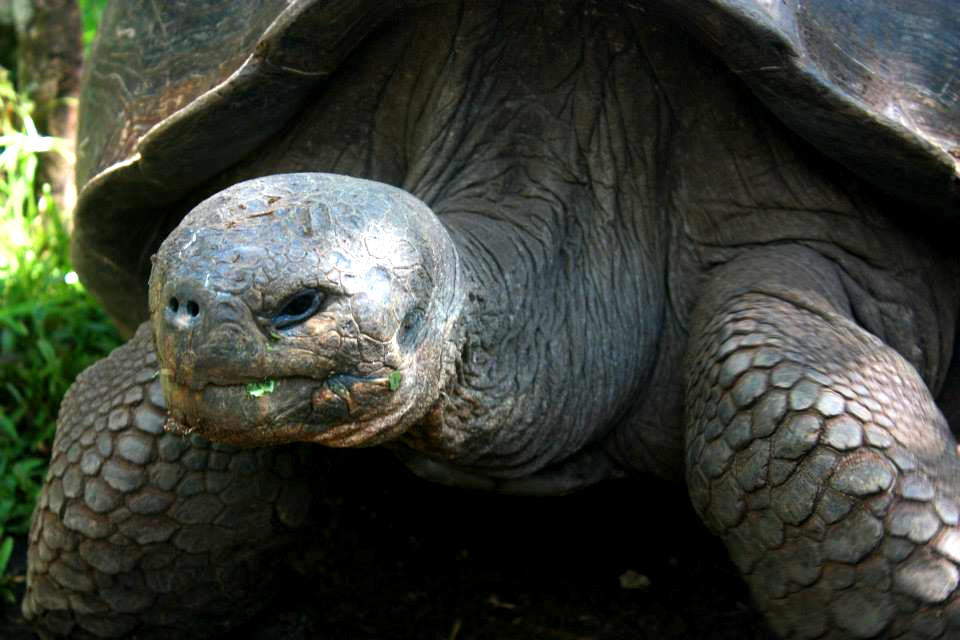
| Santa Cruz (Puerto Ayora) | Flight to Baltra, then $5 airport bus, $1 Itabaca Channel ferry and bus (~$5) or taxi (~$25–30) to town | Hub island | Giant tortoises in the highlands, Charles Darwin Station, Tortuga Bay, Las Grietas | First-timers, base for day tours to North Seymour, Bartolomé, Plazas, Santa Fe |
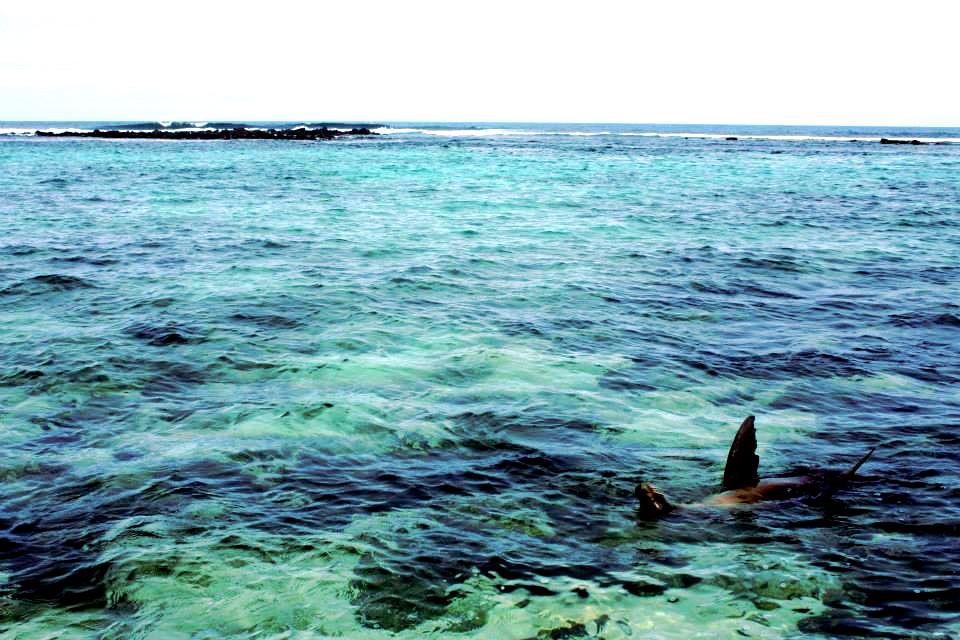
| San Cristóbal (Puerto Baquerizo Moreno) | Direct flight; the airport is in town | Speedboat 2–2.5 h | Sea lions on town beaches, La Lobería, Kicker Rock snorkel | Easy arrival, sea lions, a relaxed town |
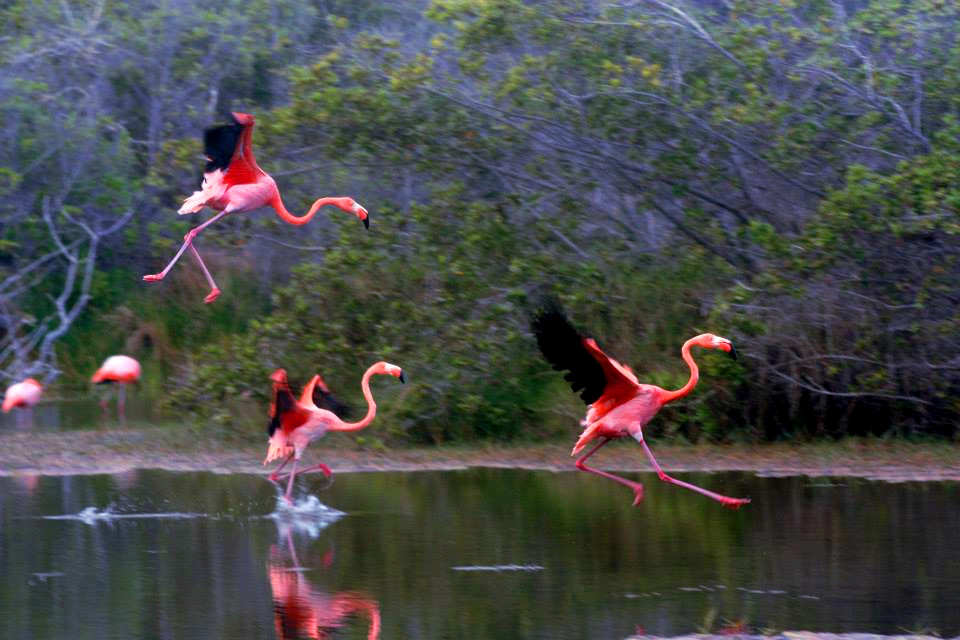
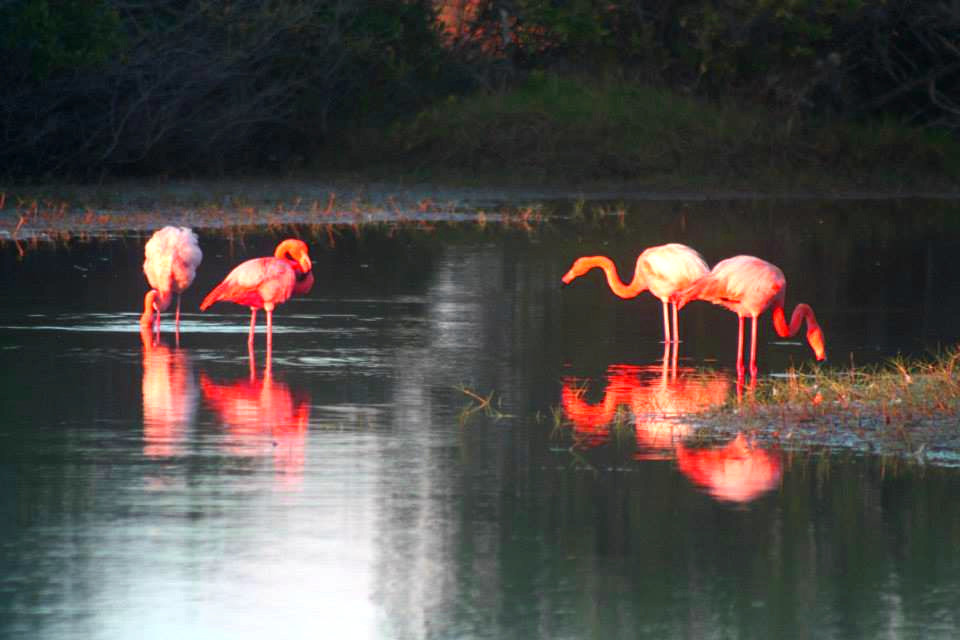
| Isabela (Puerto Villamil) | Speedboat from Santa Cruz, plus $10 Isabela fee for foreigners on the pier | Speedboat 2–2.5 h | Flamingo lagoons, penguins, Los Túneles, Sierra Negra volcano, Wall of Tears | Wildlife and landscapes, fewer crowds |
| Floreana (Puerto Velasco Ibarra) | Day tour or limited speedboat from Santa Cruz | About 2 h by boat | Post Office Bay history, highland springs, snorkeling | A day trip rather than a base |
Local tip: Bring cash in small bills. The Isabela pier fee, water taxis ($1–2) and many small shops are cash only, and ATMs on Isabela are unreliable.
As seen on: http://whc.unesco.org/en/list/1
Situated in the Pacific Ocean some 1,000 km from the South American continent, these 19 islands and the surrounding marine reserve have been called a unique ‘living museum and showcase of evolution’. Located at the confluence of three ocean currents, the Galápagos are a ‘melting pot’ of marine species. Ongoing seismic and volcanic activity reflects the processes that formed the islands. These processes, together with the extreme isolation of the islands, led to the development of unusual animal life – such as the land iguana, the giant tortoise and the many types of finch
Outstanding Universal Value
2026 update: This section summarizes UNESCO’s official statement for the site (see the UNESCO World Heritage listing). If you want the practical side, jump to the table above or to the planning section at the end of this article.
Brief synthesis
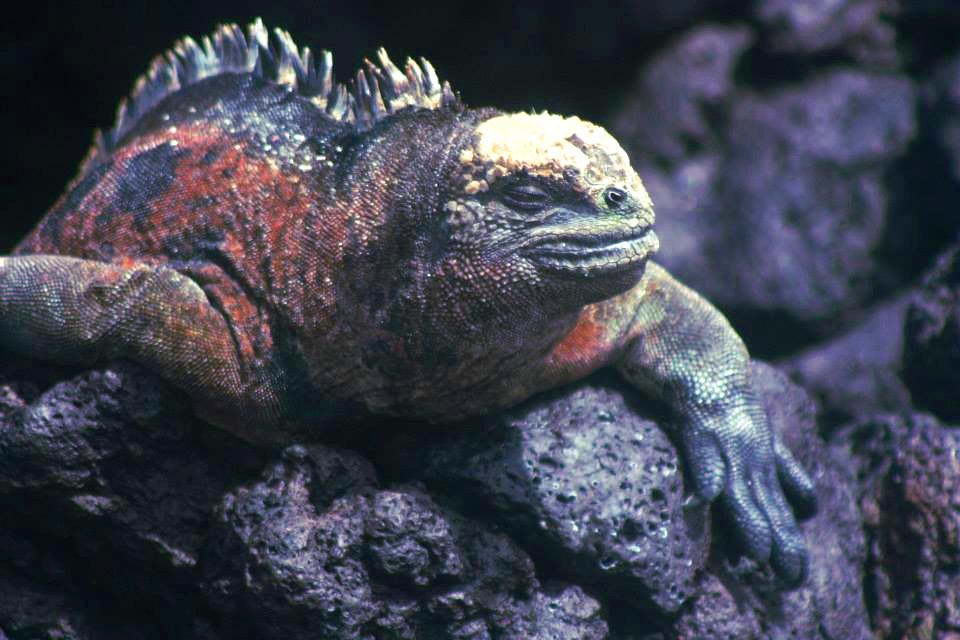
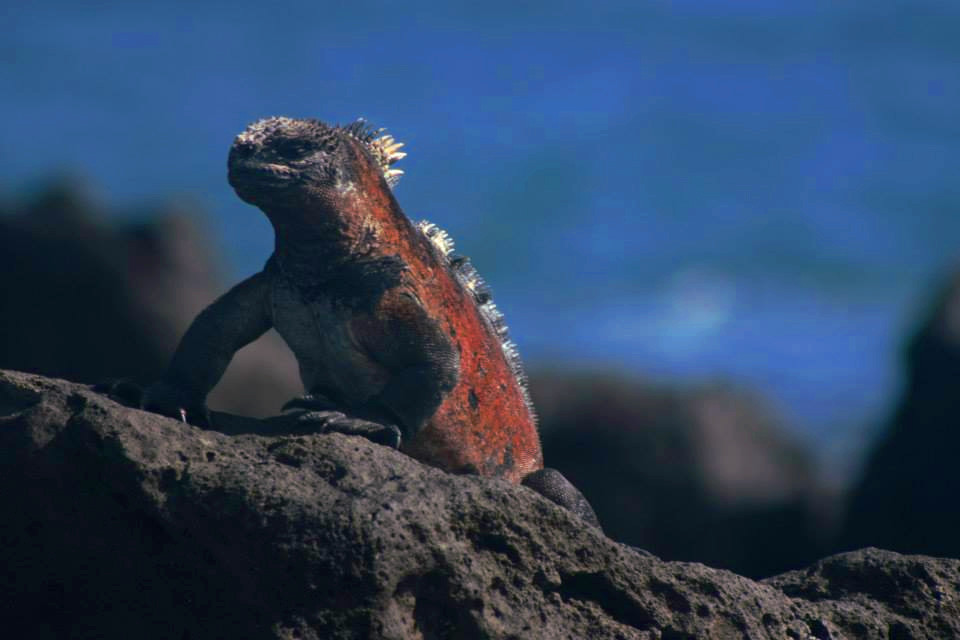
The Galapagos Islands area situated in the Pacific Ocean some 1,000 km from the Ecuadorian coast. This archipelago and its immense marine reserve is known as the unique ‘living museum and showcase of evolution’. Its geographical location at the confluence of three ocean currents makes it one of the richest marine ecosystems in the world. Ongoing seismic and volcanic activity reflects the processes that formed the islands. These processes, together with the extreme isolation of the islands, led to the development of unusual plant and animal life – such as marine iguanas, flightless cormorants, giant tortoises, huge cacti, endemic trees and the many different subspecies of mockingbirds and finches – all of which inspired Charles Darwin’s theory of evolution by natural selection following his visit in 1835.
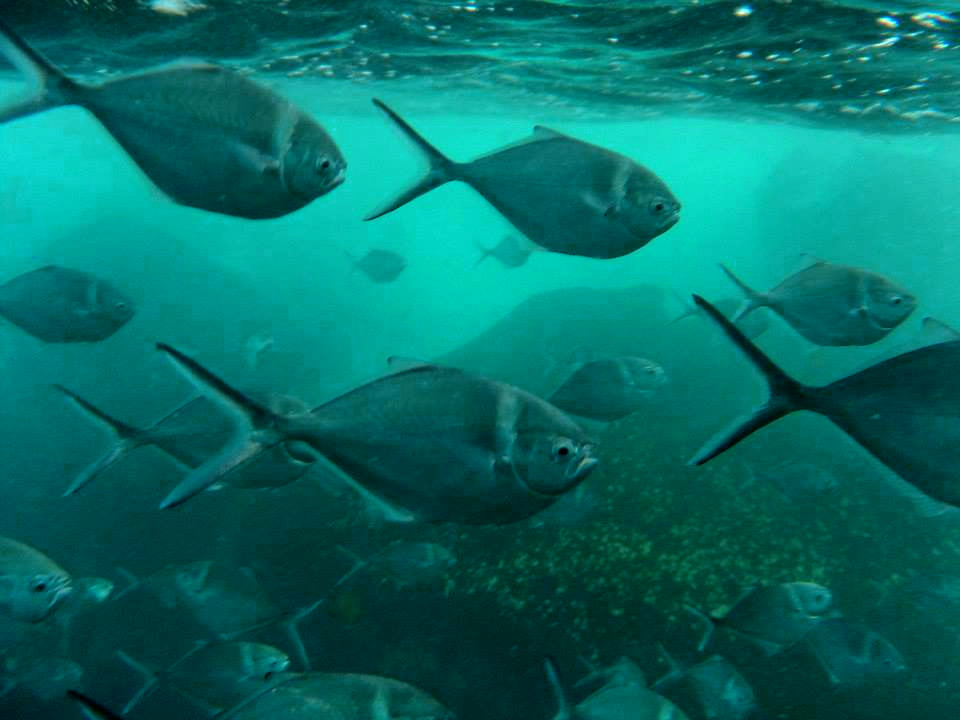
Criterion vii: The Galapagos Marine Reserve is an underwater wildlife spectacle with abundant life ranging from corals to sharks to penguins to marine mammals. No other site in the world can offer the experience of diving with such a diversity of marine life forms that are so familiar with human beings, that they accompany divers. The diversity of underwater geomorphological forms is an added value to the site producing a unique display, which cannot be found anywhere else in the world.
Criterion viii: The archipelago´s geology begins at the sea floor and emerges above sea level where biological processes continue.. Three major tectonic plates—Nazca, Cocos and Pacific— meet at the basis of the ocean, which is of significant geological interest. In comparison with most oceanic archipelagos, the Galapagos are very young with the largest and youngest islands, Isabela and Fernandina, with less than one million years of existence, and the oldest islands, Española and San Cristóbal, somewhere between three to five million years. The site demonstrates the evolution of the younger volcanic areas in the west and the older islands in the east. On-going geological and geomorphological processes, including recent volcanic eruptions, small seismic movements, and erosion provide key insights to the puzzle of the origin of the Galapagos Islands. Almost no other site in the world offers protection of such a complete continuum of geological and geomorphological features.
Criterion ix: The origin of the flora and fauna of the Galapagos has been of great interest to people ever since the publication of the “Voyage of the Beagle” by Charles Darwin in 1839. The islands constitute an almost unique example of how ecological, evolutionary and biogeographic processes influence the flora and fauna on both specific islands as well as the entire archipelago. Darwin’s finches, mockingbirds, land snails, giant tortoises and a number of plant and insect groups represent some of the best examples of adaptive radiation which still continues today. Likewise, the Marine Reserve, situated at the confluence of 3 major eastern Pacific currents and influenced by climatic phenomena such as El Niño, has had major evolutionary consequences and provides important clues about species evolution under changing conditions. The direct dependence on the sea for much of the island’s wildlife (e.g. seabirds, marine iguanas, sea lions) is abundantly evident and provides an inseparable link between the terrestrial and marine worlds.
Criterion x: The islands have relatively high species diversity for such young oceanic islands, and contain emblematic taxa such as giant tortoises and land iguanas, the most northerly species of penguin in the world, flightless cormorants as well as the historically important Darwin’s finches and Galapagos mockingbirds. Endemic flora such as the giant daisy trees Scalesia spp. and many other genera have also radiated on the islands, part of a native flora including about 500 vascular plant species of which about 180 are endemic. Examples of endemic and threatened species include 12 native terrestrial mammal species (11 endemic, with 10 threatened or extinct) and 36 reptile species (all endemic and most considered threatened or extinct), including the only marine iguana in the world. Likewise the marine fauna has an unusually high level of diversity and endemism, with 2,909 marine species identified with 18.2% endemism. High profile marine species include sharks, whale sharks, rays and cetaceans. The interactions between the marine and terrestrial biotas (e.g. sea lions, marine and terrestrial iguanas, and seabirds) are also exceptional. Recent exploration of deep sea communities continues to produce new additions to science.


Integrity
2026 update: The numbers here are dated. Ecuador’s 2022 census counted 28,583 residents in Galápagos, and the islands received 279,277 visitors in 2024 (329,475 in 2023), about 78% of them on land-based trips rather than cruises. In January 2022 Ecuador also created the Hermandad Marine Reserve, adding about 60,000 km² of protected ocean next to the existing reserve (Charles Darwin Foundation).
The Galapagos archipelago is located about 1,000 km from continental Ecuador and is composed of 127 islands, islets and rocks, of which 19 are large and 4are inhabited. 97% of the total emerged surface (7,665,100 ha) was declared National Park in 1959. Human settlements are restricted to the remaining 3% in specifically zoned rural and urban areas on four islands (a fifth island only has an airport, tourism dock, fuel containment, and military facilities). The islands are surrounded by the Galapagos Marine Reserve which was created in 1986 (70,000 km2) and extended to its current area (133,000 km2) in 1998, making it one of the largest marine reserves in the world. The marine reserve includes inland waters of the archipelago (50,100 km2) in addition to all those contained within 40 nautical miles, measured from the outermost coastal islands. Airports on two islands (Baltra and San Cristobal) receive traffic from continental Ecuador with another airport on Isabela mostly limited to inter-island traffic. All the inhabited islands have ports to receive merchandise. The other uninhabited islands are strictly controlled with carefully planned tourist itineraries limiting visitation. Around 30,000 people live on the islands, and approximately 170,000 tourists visit the islands each year.
Protection and management requirements
2026 update: Since August 1, 2024, most foreign adults pay a $200 Galápagos National Park entry fee (it was $100), partly to fund conservation and limit pressure from tourism. As a visitor you help by keeping at least 2 meters (6 feet) from wildlife, never feeding animals, staying on marked trails and visiting protected sites with a licensed naturalist guide.
The main threats to the Galapagos are the introduction of invasive species, increased tourism, demographic growth, illegal fishing and governance issues (i.e. who takes responsibility for decisions given the large number of stakeholders with conflicting interests involved in managing the islands). These issues are constantly analyzed and monitored to adequately manage them and reinforce strategies to minimize their impact.
In 1986 a law was passed to control fishing and over-exploitation of Galapagos marine resources. Protection was further strengthened by the “Special Regime Law for the Conservation and Sustainable Development in the Province of the Galapagos” of 1998, and inscribed in the Constitution of the Republic of Ecuador. This law designated the current Galapagos Marine Reserve as a protected area under the responsibility of the Galapagos National Park Service. Among other issues, it provides the specific legal framework over which many aspects of island life are to be regulated, including provincial planning; inspection and quarantine measures; fisheries management; control and marine monitoring; residency and migration of people to the islands; tourism through a visitor management system, permits and quotas; agriculture; waste management; and “total control” of introduced species. This management imposes some limitations on the exercise of the rights of people living in this geographical area, but also provides them with preferential rights to use the natural resources sustainably. Within this framework the Galapagos National Park Service has periodically prepared Management Plans since 1974 to date, which have been developed in a participatory manner among the different social and economic groups through community representatives and local authorities to address the changing realities of the Galapagos ecosystem. This includes tools for development and conservation management of natural resources in harmony with international standards. For example, a zoning system has been implemented to establish areas of sustainable use and areas prohibited to the local population. Governmental institutions contribute to the funding of conservation and management in the archipelago. Other support comes from the entry fee paid by tourists and a small percentage from international donations.
Article: http://whc.unesco.org/en/list/1
How do you visit the Galápagos from Quito in 2026?
Fly from Quito or Guayaquil to Baltra (for Santa Cruz) or San Cristóbal with Avianca or LATAM. Most Quito flights stop in Guayaquil, and a round trip usually costs $350–600 for foreigners. Before check-in you buy the $20 transit control card (INGALA/TCT) at the airport, and your bags go through a biosecurity check. On arrival you pay the $200 park fee in cash (foreign adults 12+; $100 for children under 12 and for adults from Andean Community or Mercosur countries).
Most independent travelers island hop: they base themselves on Santa Cruz, take a 2–2.5 hour speedboat to Isabela or San Cristóbal, and add day tours to uninhabited islands. Cruises reach more remote islands but cost much more. Our Galápagos on a budget guide breaks down real 2026 costs, and our season-by-season guide helps you pick the month.
5 Day Galápagos Island Hopping on a Budget (3 Islands) · 5 days · Santa Cruz, Isabela and a Santa Fe day trip · daily departures on request
Hotels, breakfasts and lunches, speedboats, snorkel gear, two airport transfers and guided activities like the Isabela flamingo lagoons and the Santa Cruz tortoise highlands. Flights, the $200 park fee and the $20 transit card are extra. Ask us on WhatsApp for the current price.
Related guides
- Best time to visit the Galápagos Islands: 2026 season-by-season guide
- Galápagos on a budget: real 2026 costs
- Things to do in the Galápagos Islands
- Island hopping vs cruise tours to the Galápagos
- Bartolomé Island: Pinnacle Rock and penguins
Plan it with us
Our office is at Pedro Fermín Cevallos N6-78 y Olmedo in Quito, next to Community Hostel, and our local team plans Galápagos trips every week. Message us on WhatsApp at +593 97 953 3832 or write to info@communitytravel.ec with your dates, and we will send current prices for flights, hotels and tours.
Frequently asked questions
Where are the Galápagos Islands?
The Galápagos Islands are in the Pacific Ocean, about 1,000 km (600 miles) west of mainland Ecuador, straddling the equator. They belong to Ecuador and form one of its provinces. There are 13 major islands plus many smaller islets and rocks, and only four have towns: Santa Cruz, San Cristóbal, Isabela and Floreana. Flights leave from Quito and Guayaquil.
How much does it cost to enter the Galápagos in 2026?
Since August 1, 2024, foreign adults (12 and older) pay a $200 Galápagos National Park entry fee, and foreign children under 12 pay $100. Adults from Andean Community or Mercosur countries pay $100. Everyone also buys a $20 transit control card at the Quito or Guayaquil airport. If you visit Isabela, add a $10 fee for foreigners at the Puerto Villamil pier.
Can you visit the Galápagos without a cruise?
Yes. About 78% of visitors in 2024 traveled land-based, staying in hotels on Santa Cruz, Isabela or San Cristóbal and moving between islands by speedboat. From those towns you can visit free sites like Tortuga Bay or La Lobería on your own and join guided day tours to uninhabited islands such as North Seymour, Bartolomé or Santa Fe.
How many days do you need in the Galápagos?
Plan at least 5 days, because a full day goes to flights and transfers at each end. Five days lets you see Santa Cruz and one more island. With 7 to 8 days you can cover Santa Cruz, Isabela and San Cristóbal with a couple of day tours, which is the trip most of our travelers choose.
Which Galápagos island is best to stay on?
Santa Cruz is the best base for a first trip: it is central, has the most hotels and restaurants, and most day tours leave from there. Isabela is quieter and better for wildlife and landscapes like Sierra Negra and Los Túneles. San Cristóbal has an airport in town and sea lions everywhere, which makes it easy for a short stay.