Quick answer: Yahuarcocha (“lake of blood” in Kichwa) is a lake at 2,190 m on the edge of Ibarra, in northern Ecuador. Spanish chronicles say Inca ruler Huayna Capac massacred Caranqui and Cayambe fighters here, likely in the 1490s or early 1500s. The death tolls are unverified. Today it is a free lakeside park with a racetrack, boats and paragliding.
Updated September 2026 by our local guides in Quito: we added how to get to the lake from Ibarra and Otavalo, what you can do there today, and notes on what historians can and cannot confirm about the battle.
Yahuarcocha at a glance (2026)
| Topic | What to know (as of 2026) |
|---|---|
| Where | 2–4 km northeast of central Ibarra, Imbabura province, 2,190 m. The lake covers about 257 ha and is only about 7 m deep |
| From Quito | Bus from Terminal Carcelén to Ibarra, about 2 h 40 min, around $4–5 (ANT reference fare $4.31 in 2026) |
| From Otavalo | Local buses to Ibarra run all day and take about 30–40 min |
| From Ibarra | City bus marked Yahuarcocha (urban fare about $0.35) or a taxi, roughly 10–15 min |
| Entrance | Free; you pay only for activities |
| What to do | Walk or cycle the lakeshore road, boat rides, fried tilapia at lakeside stalls, races at the Autódromo, weekend tandem paragliding from the hills above |
| Time needed | 2–3 hours, easy to combine with Otavalo market |
Author: Bryan Hill
Laguna Yahuarcocha, meaning blood lake in the Kichwa language, is a sacred lake of Ecuador. Looking across the still water in the picturesque region of Ibarra, it is hard to imagine that it was once the scene of a bloody massacre, a consequence of indigenous resistance against Inca domination.
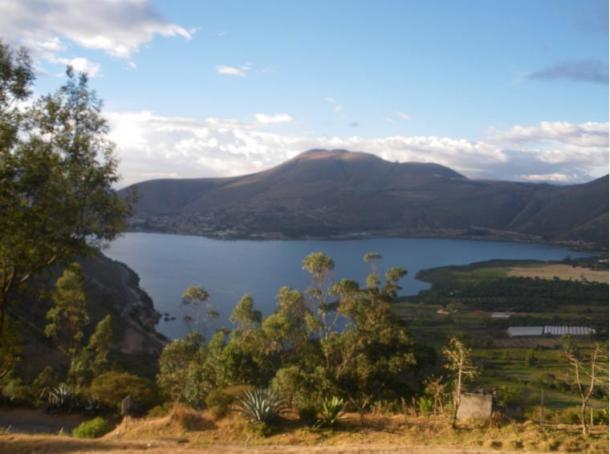
Laguna Yahuarcocha, also spelt Yawarkucha, is located about 3 kilometers (1.86 miles) from the northern city of Ibarra. Sitting at a height of 2190 meters (7185ft) above sea level, it is one of the region’s main attractions today. It is estimated to be around 12,000 years old, and is a vestige of the post-glacier age. Historically, it is important because studies by some researchers claim this area holds wide, unexplored archaeological evidence.
The name Yahuarcocha (‘Yahuar’ – blood, ‘Cocha’ – lake) has its origins in Kichwa, which is part of the Quechuan language spoken primarily in the Andes region of South America.
This so named ‘blood lake’ was the scene of an ancient battle between the Incas, with Huayna-Capac (11th leader of the Incas and last undisputed emperor to rule) as their leader against a united front of indigenous peoples known as the Caranqui-Cayambe-Pasto confederation. Prior to the Inca conquest in the late fifteenth century, the Kingdom of Quito (modern day Ecuador) was made up of several linguistic groups including Pasto, Otavalo-Caranqui and Cayambe.
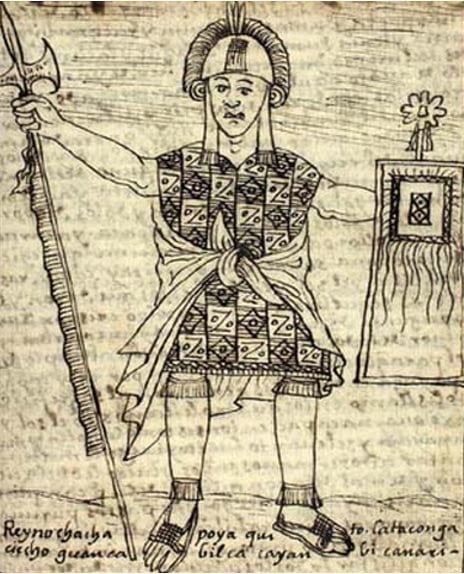
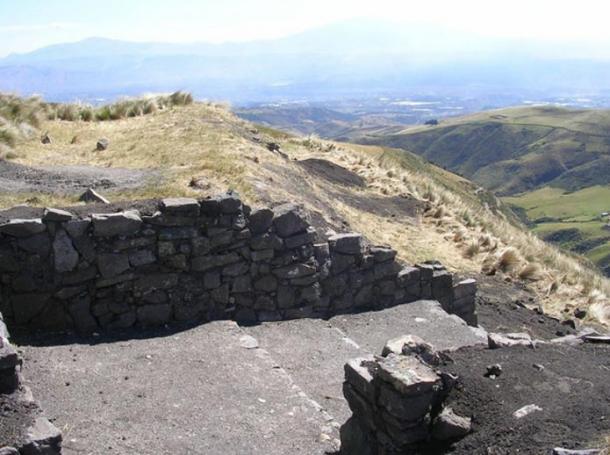
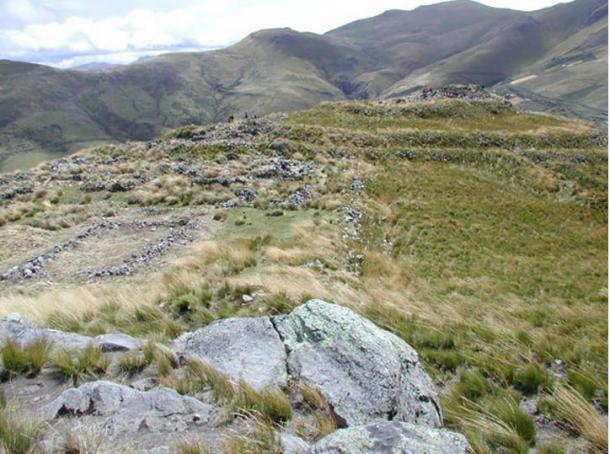
Inca fortresses, built around the time of the battle, have recently been discovered near an extinct volcano called Pambamarca. Its discovery provided archaeologists with evidence of the war fought by the Inca shortly before the Spanish conquistadors arrived. Twenty fortresses have been identified as having been built by the Inca and two forts were built by the Cayambe. Evidence suggests that there was a pre-Columbian frontier, or borderline, which experts think existed between the Inca fortresses and the fortresses of the indigenous Cayambe people.
The discovery provided archaeological evidence to support the legend of Lake Yahuarcocha, which Spanish chroniclers told when they penetrated into South America during the 16th and 17th centuries. According to these stories, Inca ruler Huayna Capac sought to conquer the Cayambe using a “very powerful army.” He was hoping for a quick victory but ended up getting entangled in a long struggle.
- The Inca-Caranqui Water Temple of Ecuador: A display of wealth and skillful hydraulic engineering
- Secrets of Vilcabamba, Playground of the Inca and Valley of Longevity
- Archaeologists uncover 4,200-year-old building in Ecuador
The Battle of Yahuarcocha
2026 note on dates: The year 1487 appears in some accounts, but the date is uncertain. Most historians place Huayna Capac’s conquest of northern Ecuador between about 1493 and 1525, so the final battle at the lake is more often dated to the 1490s or early 1500s. The story reaches us mainly through Spanish chroniclers such as Miguel Cabello de Balboa, writing decades after the events. See the Inca-Caranqui and Yahuarcocha entries for a summary of the sources.
The bloody Battle of Yahuarcocha took place over in 1487. The Cayambe had realized that their forces were not sufficient to face the Inca on an open battlefield, and according to the Spanish missionary Bernabe Cobo (in his 17th century book History of the Inca Empire), they withdrew to make strongholds in a very large fortress. Huayna Capac ordered his men to lay siege on the fortress and to bombard it continuously. The Cayambe put up a fierce resistance and forced the Inca to retreat due to high number of fatalities. Huayna Capac gathered a huge army to definitively subdue definitely the ‘rebels’. The Inca eventually succeeded in driving the Cayambe out of their strongholds and onto the shores of the lake.
A massacre at Lake Yahuarcocha
What is documented vs claimed: A violent Inca campaign against the Caranqui and Cayambe is well supported by chronicles and archaeology. The figures of 20,000 to 50,000 dead, and the lake literally turning red, come from those chronicles and from oral tradition. No excavation has counted the dead, so treat the numbers as the story’s scale, not a measured fact.
When Huayna-Capac finally conquered the tribes, historical documents record that he massacred all of the Caranqui males who were 12 years or older and had their bodies dumped into Yahuarcocha, which turned red with blood. Cobo writes that “the Inca ordered his men to cut the enemies’ throats without pity as they caught them and to throw the bodies into the lake.”
Current archaeological studies in the area have found ceramic fragments and parts of bones belonging to teenagers and adults. These bones show overwhelming impacts that suggest body to body fights, however, the total number of deaths here remains largely undetermined. Estimates range anywhere between 20,000 to 50,000 indigenous people having been murdered by the Incas.
Unearthing evidence of the great battle
2026 update: The Pambamarca fortresses described here are in the Cayambe area, south of Ibarra, not at the lake. Much closer to Yahuarcocha is the Inca-Caranqui site in Ibarra’s Caranqui neighborhood, where a large Inca ceremonial pool of finely cut stone was excavated in 2008. Tradition says Atahualpa, Huayna Capac’s son, was born in Caranqui around 1500.
The newly discovered Inca fortresses (near Pambamarca) contained stone platforms called ushnus, and are located on ridges about 3,000 meters (10,000) feet above the ground. The soldiers who lived in them were prepared for battle with well over 100 structures having been found at the site of Quitoloma. The structures were filled with Inca weaponry and quite a few sling stones were retrieved from the houses, suggesting they had been lying in wait for the enemy to attack, or were about to storm down the hill.
The two Cayambe forts, by comparison, are made out of a tough volcanic material called cangahua. They are sizable fortresses with people likely having lived inside and outside their walls. One of the forts has evidence for a battle with two types of ammunition (sling stones and bola stones). Both fortifications housed pottery designed in indigenous Ecuadorian style rather than Inca styles, and Cayambe pottery continued to be used in the region, suggesting that their culture carried on, at least in some ways. It could be that the people decided after many years of resistance and warfare to lay down their arms or become allies with the Inca.
In the decades following the war, large numbers of Spanish would make their home in Ecuador and neighboring Peru. Smallpox would ravage the population and the Inca soon found themselves fighting an enemy equipped with superior firepower. Against these odds, they fell back, with their last stronghold at Vilcabamba, Ecuador, falling in 1572. The conquest was nothing short of a disaster for the Inca and the indigenous people already living there. When the Spanish took over, they built estates called haciendas and the descendants of the Cayambe were forced into labor. They reportedly worked under severe conditions and in windowless room – a humiliating end for a people who, just decades earlier, had fought a war to win their freedom.
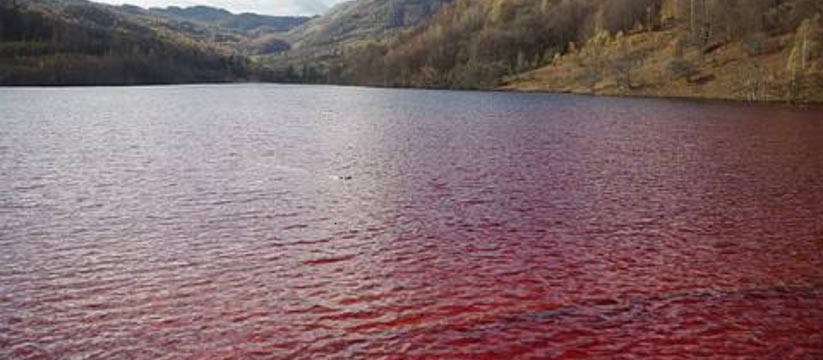
Featured image: A red lake. Representational image only.
By Bryan Hill
How do you visit Yahuarcocha from Ibarra or Otavalo today?
From Quito, take a bus from Terminal Carcelén to Ibarra (about 2 h 40 min, around $4–5 as of 2026). From Otavalo, frequent local buses reach Ibarra in 30–40 minutes. In Ibarra, catch a city bus signed Yahuarcocha or take a taxi for a few dollars; the ride is only 10–15 minutes. There is no entrance fee.
Today the lake feels far from its bloody past. The Autódromo Internacional de Yahuarcocha racetrack circles the shore and hosts car races, most famously around Ibarra’s September festivities. Families come on weekends for boat rides and fried tilapia, and cyclists and runners use the lakeside road. On weekend mornings, tandem paragliding flights launch from the hills above the lake (one operator lists about $68 per flight, 15–40 minutes depending on wind). The lookouts on the surrounding hills are the best place to see the heart-shaped lake with Imbabura volcano behind it.
Otavalo Indigenous Market · from USD 57.50 pp · 1 day · Tuesdays & Saturdays
Transport from Quito, a local guide and lunch are included. The tour explores Imbabura, the same province and the same Kichwa and Caranqui heritage as Yahuarcocha. Optional extras: Quitsato equator site $5, boat ride $3.25. Ask us if you want to add a stop at the lake.
Related guides
- Otavalo Market: the complete guide
- Ingapirca and the Inca in Ecuador
- Hiking in Ecuador
- Things to do in Quito
- Ecuador itinerary for 7, 10 or 14 days
Plan it with us
Questions before you go? Stop by our office at Pedro Fermín Cevallos N6-78 y Olmedo in Quito, message us on WhatsApp at +593 97 953 3832, or write to info@communitytravel.ec. Our local guides answer every message and will tell you honestly whether a tour or the bus makes more sense for your trip.
Frequently asked questions
Why is Yahuarcocha called the Lake of Blood?
Yahuarcocha means “lake of blood” in Kichwa. According to Spanish chronicles, the Inca ruler Huayna Capac defeated a Caranqui and Cayambe alliance here and executed thousands of men, throwing their bodies into the water, which turned red. The battle is widely accepted, but the details and death toll come from accounts written decades later.
How many people died at Yahuarcocha?
Nobody knows. Chroniclers and later writers give figures from about 20,000 to 50,000, but these were never counted. Archaeologists have found bones, weapons and ceramics related to the Inca wars in the region, yet no excavation has established a death toll. It is safest to say thousands likely died and the exact number is unknown.
When did the Battle of Yahuarcocha happen?
The exact year is uncertain. Some accounts give 1487, but most historians place Huayna Capac’s conquest of northern Ecuador between about 1493 and 1525, so the battle is often dated to the 1490s or early 1500s. Either way it came only a few decades before the Spanish arrived in 1532.
How do I get to Laguna Yahuarcocha from Ibarra?
The lake is only 2–4 km northeast of central Ibarra. Take a city bus marked Yahuarcocha (urban fare around $0.35) or a taxi, which costs a few dollars and takes 10–15 minutes. From Otavalo, first take a local bus to Ibarra, about 30–40 minutes. There is no entrance fee to the lake.
What can you do at Yahuarcocha today?
Walk or cycle the lakeshore, take a boat ride, eat fried tilapia at lakeside stalls, watch races at the Autódromo Internacional de Yahuarcocha, or try tandem paragliding on weekend mornings from the hills above. The surrounding lookouts give the classic view of the heart-shaped lake. Two to three hours is enough, and it combines well with Otavalo.