Quick answer: The best things to do in Quito are walking the UNESCO-listed Old Town (La Compañía, Plaza Grande, San Francisco), riding the TelefériQo to about 3,945 m, climbing the Basílica towers, eating at Mercado Central and strolling La Ronda. Plan 2–3 days in the city plus day trips to Mitad del Mundo, Cotopaxi, Quilotoa, Otavalo or Mindo.
We are Ecuadorian guides who live and work in Quito, and our office sits on the edge of the historic center. Every week we walk these plazas with travelers, eat in these markets and drive the roads to Cotopaxi and Otavalo, so this list is what we actually recommend to friends, including the few popular spots we think you can skip.
What are the best things to do in Quito? Top 10 at a glance
If you only have a short stay, start with these ten. Prices are for foreign adults as of 2026 and can change, so treat them as a guide.
| Attraction | Cost (as of 2026) | Time needed | Area |
|---|---|---|---|
| Free Walking Tour of the Old Town | Free (tip-based) | 3 h | Historic Center |
| Iglesia de la Compañía | Around $4–6 | 30–45 min | Historic Center |
| Basílica del Voto Nacional towers | $4 (towers), $2 (nave) | 1–1.5 h | Historic Center (north) |
| TelefériQo cable car | $9 | 2–4 h | West slope of Pichincha |
| El Panecillo viewpoint | Free outside, small fee inside the monument | 45 min + taxi | South of Old Town |
| Mercado Central lunch | $3–6 per plate | 1 h | Historic Center (east) |
| La Ronda street | Free | 1 h | Historic Center (south) |
| Capilla del Hombre (Guayasamín) | Around $10 | 2–3 h | Bellavista (north-east) |
| Mitad del Mundo + Intiñan | $5 + around $5–6 | Half day | San Antonio de Pichincha (north) |
| Cotopaxi National Park | Free park entry | Full day | About 1.5–2 h south |
How many days should you spend in Quito?
Two full days covers the Old Town, one viewpoint and a museum or two. Three days lets you add the TelefériQo, a neighborhood like La Floresta and a relaxed market lunch. With four or five days you can use Quito as a base for day trips, which is what most of our guests do before heading to the Amazon or Galápagos.
Take it easy on day one. Quito sits at about 2,850 m, and many travelers feel short of breath, get headaches or sleep badly the first night. Read our guide to preventing altitude sickness (soroche) in Quito and save the TelefériQo and Cotopaxi for day two or later.
Old Town essentials: what to see in Quito’s historic center
Quito’s historic center was among the very first sites on the UNESCO World Heritage List in 1978, and it is still a living neighborhood with markets, schools and government offices. For a step-by-step route, see our one perfect day in Quito Old Town itinerary.
1. Take a free walking tour of the Old Town
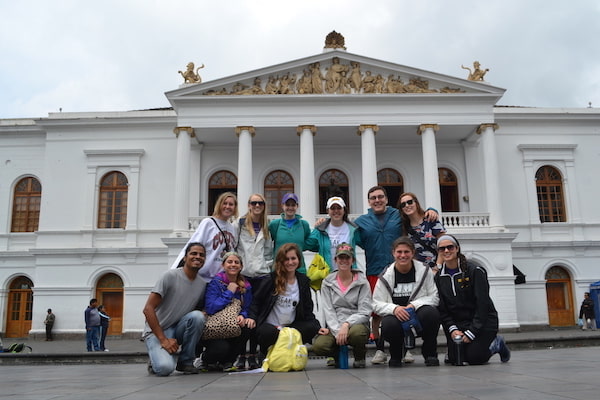
The easiest way to understand the historic center is to walk it with someone who grew up here. Our three-hour tour covers the main plazas and colonial churches, stops at a local market and includes a chocolate tasting. It is the best first-morning activity: you get oriented and learn which streets to use.
Free Walking Tour Quito · Free (tip-based) · 3 hours · Mon–Sat 10:30 & 14:30, Sun 10:30
English-speaking Ecuadorian guides, chocolate tasting, a market stop and the main plazas and churches. Meet 10 minutes early at Pedro Fermín Cevallos N6-78 y Olmedo.
2. Plaza Grande and the Presidential Palace
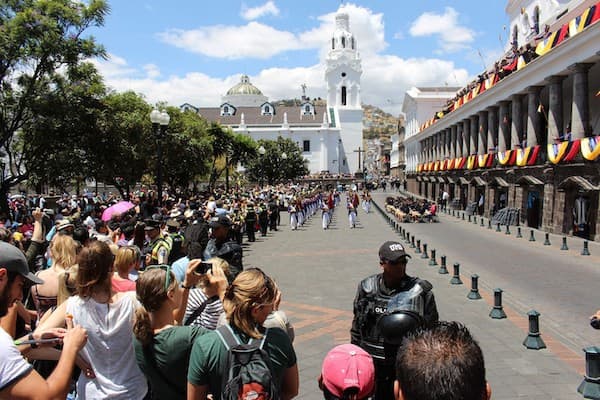
Plaza Grande (Plaza de la Independencia) is the political heart of the country, framed by the Cathedral, the Archbishop’s Palace and Carondelet, the presidential palace. The palace has offered free guided visits for years; bring your passport and ask at the entrance for the day’s times, since schedules change. On Monday mornings you may catch the changing of the guard.
3. Iglesia de la Compañía de Jesús
This Jesuit church, finished over about 160 years, is covered inside in gold leaf and is the one church we tell everyone not to miss. Entry is around $4–6 for foreigners, and it opens weekdays from 9:30 with shorter weekend hours. Photos inside are not allowed.

4. San Francisco church and plaza
Plaza San Francisco is the largest square in the Old Town and a great place to sit and watch the city. The church and convent are among the oldest in South America, and the museum and cloister are worth an hour if you like colonial art.
5. Casa del Alabado pre-Columbian museum
A beautifully designed museum of pre-Columbian art in a restored colonial house on Calle Cuenca. It opens Wednesday to Sunday from 9:00 to 17:00, and the adult ticket is $10 as of 2026. Allow about 1.5 hours.
Where are the best viewpoints in Quito?
6. TelefériQo cable car and the Rucu Pichincha hike
The TelefériQo lifts you from the city’s west side to about 3,945 m on the slopes of Pichincha volcano. The standard ticket for visitors without an Ecuadorian ID is $9, and it runs daily, from 10:00 on Monday to Thursday and from 8:00 Friday to Sunday (official hours and fares). Go early, because clouds usually roll in by late morning. Fit, acclimatized hikers can continue to the Rucu Pichincha summit (about 4,700 m), a 5–6 hour round trip; start before 10:00 and turn back if the weather closes in.
Local tip: Take a taxi or ride-hailing car to the TelefériQo base rather than walking up from the main avenue, and bring a warm layer and rain jacket even on a sunny morning. At the top it can be 10°C colder than the Old Town.
7. El Panecillo
The winged aluminum Virgin on El Panecillo hill watches over the Old Town, and the view down the length of the city is excellent. The grounds are free, and there is a small fee to climb inside the monument. Go by taxi (a few dollars from the Old Town) and do not walk up the stairs from the Old Town, which are known for robberies. More history in our guide to the Virgin of El Panecillo.
8. Basílica del Voto Nacional towers
This neo-Gothic basilica has gargoyles shaped like Ecuadorian animals, from tortoises to armadillos. According to the basilica’s official site, the nave costs $2 and the towers $4 for foreign adults, with the towers open weekdays 9:00–17:00. The climb ends on steep ladders above the clock tower, so skip the last stretch if you are not comfortable with heights.
9. Itchimbía Park
A free hilltop park east of the Old Town with a glass-and-iron cultural center and wide views of the historic center and the volcanoes. It is quieter than El Panecillo and good at sunset. Take a taxi up and back rather than walking the steep streets after dark.
Which museums in Quito are worth visiting?
10. Capilla del Hombre and Casa Museo Guayasamín
Oswaldo Guayasamín is Ecuador’s best-known painter, and this chapel-museum in the Bellavista neighborhood holds his huge, powerful works about Latin American history. Entry is around $10 and covers the chapel and his former house, with guided visits in English and Spanish. Allow 2–3 hours and combine it with a taxi to Guápulo afterward.
11. Chocolate tasting
Ecuador grows some of the world’s finest cacao, and several small chocolate shops in the Old Town offer tastings and short workshops. Our walking tour includes a tasting, and if you want more, a dedicated chocolate class usually runs 1–2 hours.
Food and markets: what to eat in Quito
12. Lunch at Mercado Central
Mercado Central is where Quiteños go for a filling lunch: corvina fried fish, locro de papa (potato and cheese soup), hornado (roast pork) and fresh fruit juices, usually $3–6 a plate. Go for lunch between 12:00 and 14:00; many stalls close by mid-afternoon. Here is our guide to eating at Quito’s Central Market.
13. Mercado San Francisco
Smaller and older than Mercado Central, this market is known for its herbal healers who perform limpias (cleansing rituals) and for fresh juice stalls. It is a short walk from Plaza San Francisco and easy to combine with a morning in the Old Town.
14. Street food and the Friday Foodie & Beer Tour
Empanadas de viento, humitas, tamales and colada morada are all easy to find in the center. If you want a guided tasting across different regions of Ecuador, our Friday evening tour is the fun way to do it. Browse our list of Ecuadorian street foods you must try first.
Friday Foodie & Beer Tour · Fridays 17:30 · 2–3 hours · check current price
Tasting portions of Ecuadorian dishes from the coast, Andes and Amazon, plus local beer, with a guide who explains what you are eating.
Which Quito neighborhoods should you explore?
15. La Ronda
This narrow cobbled street on the southern edge of the Old Town is lined with craft shops, cafes and small bars with live music. Daytime is calm; evenings, especially Thursday to Saturday, are livelier and a good place to try canelazo, a warm cinnamon drink. The street is patrolled and fine at night, but take a taxi back rather than walking the empty surrounding blocks.
16. La Floresta
A residential neighborhood with street art, independent cafes, craft beer bars and the Ocho y Medio art-house cinema. It feels far less touristy than La Mariscal and is good for an afternoon coffee and dinner.
17. Guápulo
Guápulo clings to a steep hillside below La Floresta, with a white colonial church at the bottom and views over the valley. Walk down in daylight, visit the church, and take a taxi back up, because the climb is hard at this altitude.
18. La Mariscal and Plaza Foch
The main nightlife area, full of bars, clubs and international restaurants. It is fun for a night out but has the most petty crime in the city, so keep your phone in your pocket and use registered taxis or ride-hailing apps after dark.
Local tip: At night, the Old Town empties out quickly after about 19:00 outside La Ronda and Plaza Grande. Call a car instead of walking between neighborhoods, and read our practical guide to safety in Ecuador for the basics.
Where can you find nature inside Quito?
19. Parque Metropolitano Guangüiltagua
One of the largest urban parks in South America, with eucalyptus forest trails, picnic areas and viewpoints over the Tumbaco valley and, on clear mornings, Cotopaxi. It is free and a good low-key acclimatization walk. Go in the morning and stay on the main trails.
20. Parque La Carolina and the Botanical Garden
La Carolina is Quito’s central park, busy on weekends with football games, joggers and families. Inside it, the Jardín Botánico has an orchid collection and native Andean plants for a small entry fee.
Getting around is easier since the Quito Metro opened: a ride costs $0.45 as of 2026 and it crosses the city in about 30 minutes, with stops at San Francisco in the Old Town and La Carolina.
What are the best day trips from Quito?
Quito is the best base in the country for day trips. These are the ones we run most often.
21. Mitad del Mundo and the Intiñan Museum
The official equator monument at Ciudad Mitad del Mundo costs $5 for adults (official ticket page). The GPS equator actually runs a couple of hundred meters away, and the small Intiñan Museum nearby (around $5–6 with a guided tour) is where you will see the water and egg demonstrations. It takes about an hour each way by car. Our Mitad del Mundo guide explains the history.
22. Cotopaxi National Park
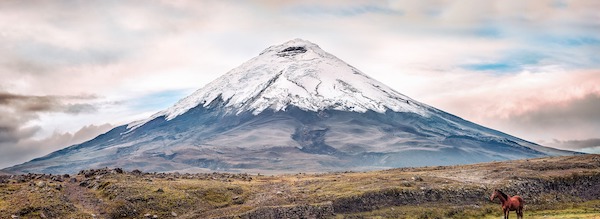
Cotopaxi, one of the world’s highest active volcanoes at 5,897 m, is about 1.5–2 hours south of Quito, and park entry is free. Most visitors hike from the car park toward the José Rivas refuge and walk around Limpiopungo Lagoon at about 3,800 m. Go on a clear morning, and see our Cotopaxi and Quilotoa guide for independent options.
Cotopaxi Bike & Hike · from USD 63 pp · 1 day · Wed/Fri/Sat/Sun
Transport from Quito, a bilingual guide, lunch, and a mountain bike and helmet to ride down to Limpiopungo Lagoon after hiking toward the refuge. Pickups at Plaza Foch (07:10) and Plaza San Blas (07:20).
23. Quilotoa crater lake
A turquoise lake inside a volcanic crater at around 3,900 m, about 3.5 hours from Quito. The hike down takes 30–45 minutes, and the climb back up is hard at this altitude (a mule costs about $10). It is a long day by bus, so many people join our Quilotoa Crater Lake tour (from $57.50, Tue/Thu/Sun) or combine it with Cotopaxi on the 2-day adventure.
24. Otavalo market
Otavalo’s Plaza de los Ponchos is one of the biggest Indigenous markets in South America, open daily with the largest market on Saturdays. Buses leave from Quito’s Carcelén terminal about every 20 minutes and take roughly 2 hours for around $2.50–3. Read our complete Otavalo market guide before you go. Our Otavalo Indigenous Market tour runs Tuesdays and Saturdays from $57.50 with lunch.
25. Mindo cloud forest (and Papallacta hot springs)
Mindo is a cloud forest town about 2 hours north-west of Quito, known for birdwatching, hummingbirds, waterfalls, zip lines and chocolate. Buses run from the La Ofelia terminal for about $3–4, or join our Mindo Cloud Forest tour on Fridays from $57.50; more in our Mindo guide. If you prefer a lazy day, Papallacta’s thermal pools sit about 1.5 hours east at around 3,300 m, and the public pools cost roughly $10–11.
Local tip: Do the Old Town and museums in the afternoon and save early mornings for mountains. Cotopaxi, the TelefériQo and Quilotoa are almost always clearest before 11:00.
What can you skip in Quito?
Honestly, we would skip the double-decker hop-on bus unless mobility is an issue, since the Old Town is best on foot. Walking up to El Panecillo is not worth the risk. And if you are short on time, pick either the Basílica towers or the TelefériQo for the big view, not both on the same day.
Where should you stay to explore Quito?
Stay in or near the Old Town if sightseeing is your priority, or in La Floresta or La Mariscal for cafes and nightlife. Our where to stay in Quito guide compares the neighborhoods, and our own Community Hostel is right next to where the walking tour starts.
Plan it with us
Start with the free walking tour on your first morning, then let us know which day trips fit your dates. Message our local team on WhatsApp at +593 97 953 3832 or email info@communitytravel.ec, or drop by our office at Pedro Fermín Cevallos N6-78 y Olmedo. You can see all our trips on the tours page.
Frequently asked questions
What is Quito best known for?
Quito is best known for its colonial Old Town, one of the first places inscribed on UNESCO’s World Heritage List in 1978, with gold-leaf churches like La Compañía. It is also known for its high altitude of about 2,850 m, its setting beneath Pichincha volcano, and its closeness to the equator at Mitad del Mundo, about an hour north of the center.
How many days do you need in Quito?
Two full days is enough for the Old Town, one viewpoint such as the TelefériQo or the Basílica towers, and a market lunch. Three days lets you add a museum and a neighborhood like La Floresta. With four or five days you can use Quito as a base for day trips to Mitad del Mundo, Cotopaxi, Quilotoa, Otavalo or Mindo.
Is Quito safe for tourists at night?
Quito is manageable at night if you are sensible. La Ronda, Plaza Foch and La Floresta are busy in the evening, but the Old Town empties quickly after about 19:00. Use registered taxis or ride-hailing apps instead of walking between neighborhoods, keep your phone out of sight, and never walk up to El Panecillo.
How much does the TelefériQo cost in 2026?
As of 2026, the standard TelefériQo ticket for visitors without an Ecuadorian ID is $9 for adults and $7 for under-18s, and it runs every day. It opens at 10:00 Monday to Thursday and at 8:00 Friday to Sunday. Go early in the morning, since clouds usually cover the views by late morning.
What is the best day trip from Quito?
For most travelers, Cotopaxi National Park is the best day trip from Quito: park entry is free, it is about 1.5 to 2 hours away, and you can hike toward the refuge and bike down to Limpiopungo Lagoon. Otavalo market is best for culture and crafts, Mindo for birds and cloud forest, and Quilotoa for a dramatic crater lake.
Can you visit Mitad del Mundo on your own?
Yes. You can reach Mitad del Mundo by bus from the La Ofelia terminal in north Quito or by taxi or ride-hailing car in about an hour. Entry to Ciudad Mitad del Mundo is $5 for adults. The nearby Intiñan Museum, closer to the GPS equator, charges around $5 to $6 and includes a guided tour with the classic experiments.
Do I need to worry about altitude sickness in Quito?
Many visitors feel mild altitude effects in Quito, which sits at about 2,850 m: headaches, shortness of breath and poor sleep on the first night. Drink plenty of water, go easy on alcohol, and plan a gentle first day in the Old Town. Save higher trips like the TelefériQo, Cotopaxi and Quilotoa for your second day or later.