Quick answer: No lost city has been confirmed near the Tayos caves. The famous Cueva de los Tayos in Morona Santiago was surveyed in 1976 by Stan Hall’s expedition, which included Neil Armstrong, and found no trace of János Móricz’s claimed “metal library.” Today you can visit only with Shuar guides from the Kuankus (Coangos) community, on a 3-day trip.
Updated September 2026 by our local guides in Quito: we added what is actually documented about the Tayos caves, clarified which cave this 2017 expedition explored, and added current access rules and costs.
Tayos Cave at a glance (2026)
| Item | Details (as of 2026) |
|---|---|
| Where | Cordillera del Cóndor, Morona Santiago province, near the Coangos and Santiago rivers, on land of the Shuar community of Kuankus (Coangos) |
| Gateway towns | Méndez or Limón Indanza, then road to the river port of Puerto Yuquianza and a 3–4 km jungle trail |
| How to get there from Quito | Bus to Macas (around 8 hours), then on to Méndez; or from Cuenca via Gualaceo and Limón to Méndez |
| Guide | Required. Access is controlled by the Shuar community; hiring a community guide is how you get permission |
| Typical trip | 3 days, 1 night camping in or near the cave and 1 night in the community |
| Cost | Roughly $230–350 per person for group trips with gear, food and guides (2025 reports); more for private trips |
| Difficulty | Hard: muddy trail, heat, a vertical rappel of about 65 m, swimming and wading inside |
| Best season | Drier months, roughly July to November; high water can close the cave |
Local tip: “Tayos” are oilbirds, and many caves across the Ecuadorian Amazon share the name. Before you book, ask which cave the trip goes to. The famous one from the 1976 expedition is the Coangos cave in Morona Santiago.
Author: ALICIA MCDERMOTT
After building trust with a local Shuar village, Ancient Origins returned once again to explore the Tayos caves in Ecuador. While the search for hidden cave entrances continues, our recent expedition also demonstrated that the secrets of the area may go beyond the caves and tales of Father Crespi and his mysterious treasures.
Day One
2026 update: This is a 2017 expedition report originally published by Ancient Origins. The team stayed near the Pastaza River, which is a different area from the famous Cueva de los Tayos on the Coangos River in Morona Santiago. What is documented about that cave: János Móricz claimed in 1969 to have found a library of metal books, Erich von Däniken popularized the story in 1973, and the 1976 Stan Hall expedition (more than 100 people, including Neil Armstrong and British and Ecuadorian military) mapped the cave and found ancient burials but no library.
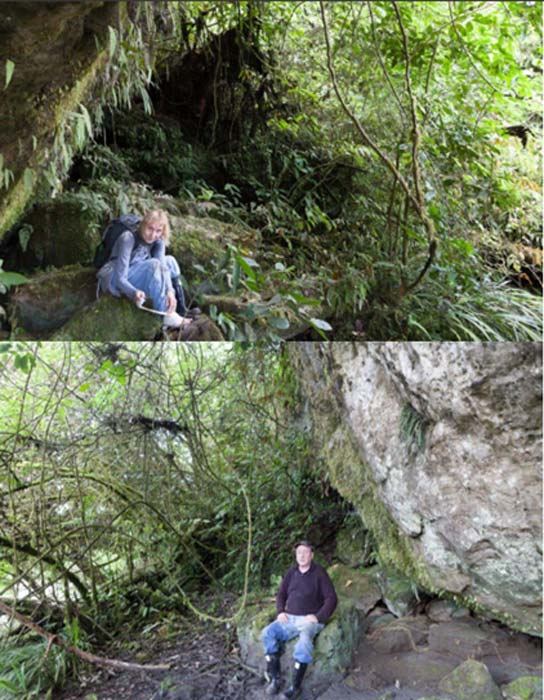
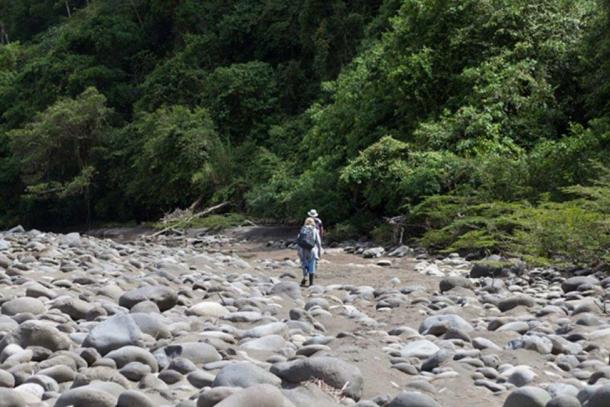
The journey to the village where our host Luis lives near the Pastaza River is not an easy one – but it sure is exciting for those who crave the adventure that accompanies steep, slippery slopes, a “bridge of danger” (a thin tree trunk and another piece of wood placed beside it), and outcroppings of jagged rocks in the Amazonian jungle.
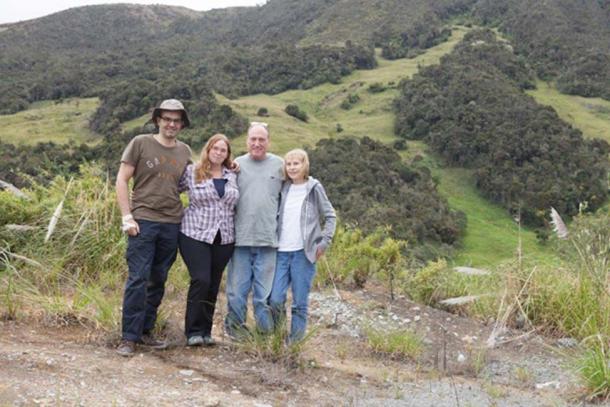
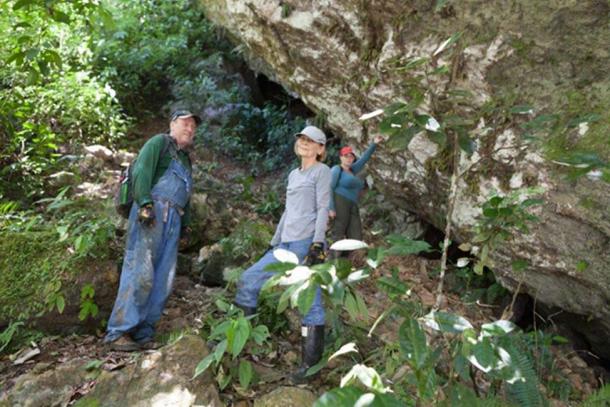
Our small group was comprised of Ancient Origins’ team members John and Alicia, and archaeology enthusiasts and AO Premium members Wendi and Scott. We arrived to the village with a few bumps and bruises, but altogether ready to begin the search for cave entrances and whatever else may arise.
The community welcomed us warmly and were glad to have new visitors. As we prepared our simple rooms we were provided with some papaya from their garden. We conversed over dinner about past and future guests before heading down to the river to do some stargazing. As the fog rolled in we returned to the dark lodging house where a cold bucket shower awaited those who felt the humidity was already having its affect.
- Expedition to Tayos Caves: Never Before Seen Photographs Shed Light on Mysterious Underground Network
- The Truth About Father Crespi and His Missing Artifacts Finally Revealed
- The Ancestral Myth of the Hollow Earth and Underground Civilizations
We soon learned that we were not the only beings in that lodging – bats and a snake made their appearance known that night and over the next few days.
Day Two
We were served a hearty breakfast in preparation for what was to be a very long day. At 8:30am we set out with a spring in our step. Unfortunately, shortly after we had passed some slim paths we were attacked by powerful wasps which could pierce our clothing and hold on even when we tried to shake and swat them off. That experience left most of us with some big red welts for the rest of the expedition.
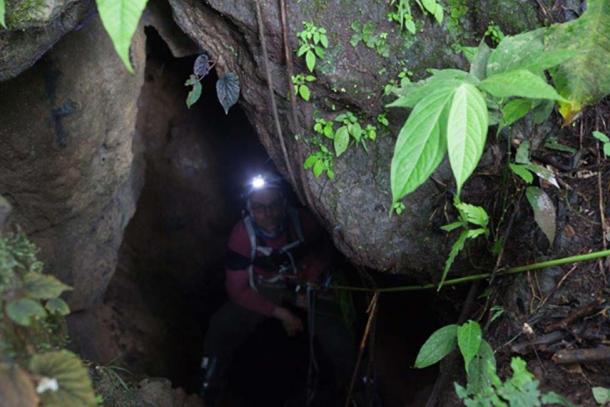
We weren’t going to let that unlucky experience stop us though! Our first planned stop was to visit one of the cave entrances found during the last expedition. After repelling in, John informed us that it was unpassable once inside.
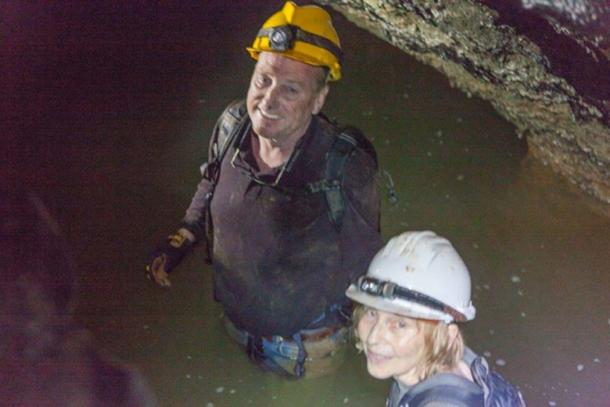
So, we set off along the beach towards another set of tunnels which were partially explored last time. When we had conquered the slippery mud on the way in, we were met by an endless series of angry bats and birds. Lucky for us they only swooped down and crossed our path. The screeching of the distressed animals may provide some explanation for why the Shuar people believed that spirits could be found within the cave and would not continue to search those tunnels after a certain point.
We waded (and sometimes swam) through varied levels of cool waters and eventually reached a place that was seemingly unpassable – at least at first glance. Scott braved the cliffs and entered what we soon called “the Scott Path” a small area that was near the roof of the cave and involved very careful footwork to cross jagged rocks.
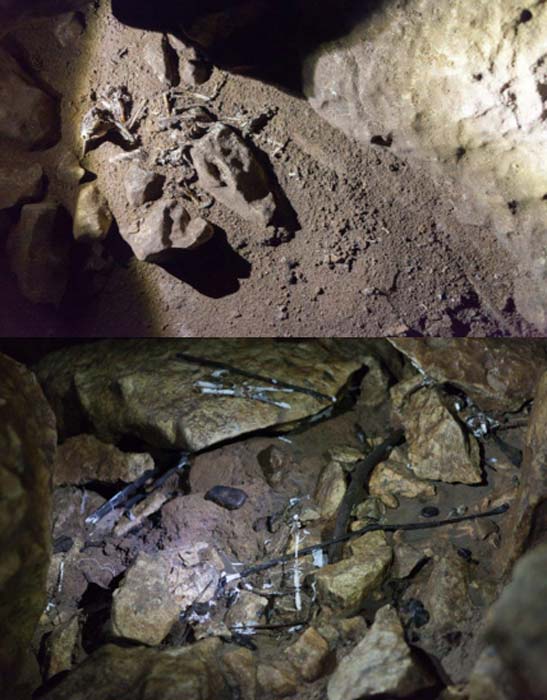
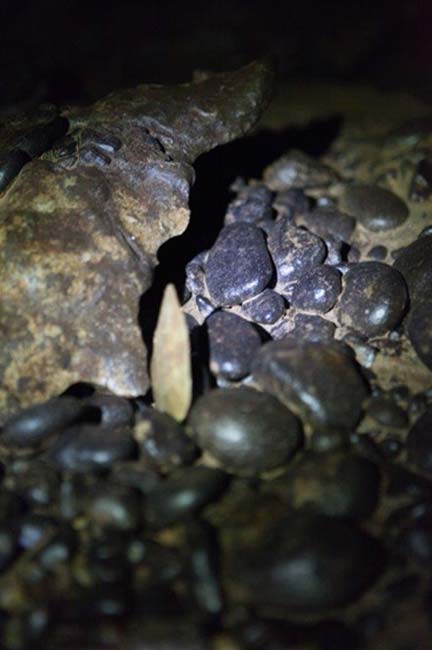
After hours of numerous slips, falls, scrapes and bruises, we eventually reached the end of this cave. No treasure or traces of it were found within. We did, however, find evidence of possible stone tools amongst an assemblage of soft black rocks. Apart from this, we noticed a strange white substance with gold droplets on some pieces of twig-like objects as well. Up from one black rock and white substance grouping we found the skeleton of a bird.
On our way out, another surprise was waiting to be found– a snake peeked out at us from a crevice just behind where we gingerly stepped into the cool waters. The serpent let us be, and we made haste towards the end of that section.
As we passed one section of the cave we noticed a passage above us that could have held a small room. John scaled the slippery rocks and set off inside to check things out as we flashed a light from another side to see if it was a real room or just a short passage. The light was seen and John prepared to make his descent…only to find that the way he had climbed up was not so easy to return down.
Scott was ready to help once again and offered to guide John’ feet back down the wall. Unlucky for him, the seemingly secure footing he used to raise himself up a little higher was not what it appeared. As the rock ledge he was standing on broke away, Scott fell down onto his back into the middle of the passage! This was probably the only time he was happy to be carrying the large and padded backpack!
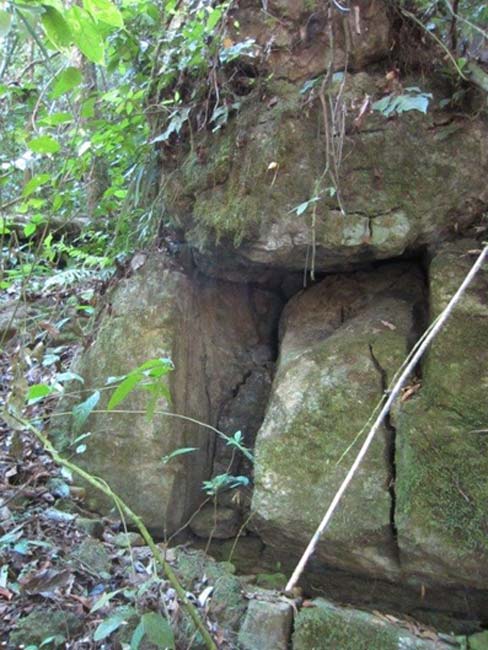
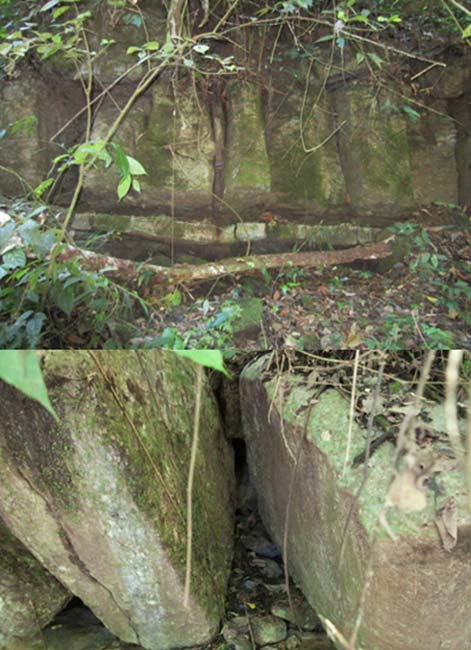
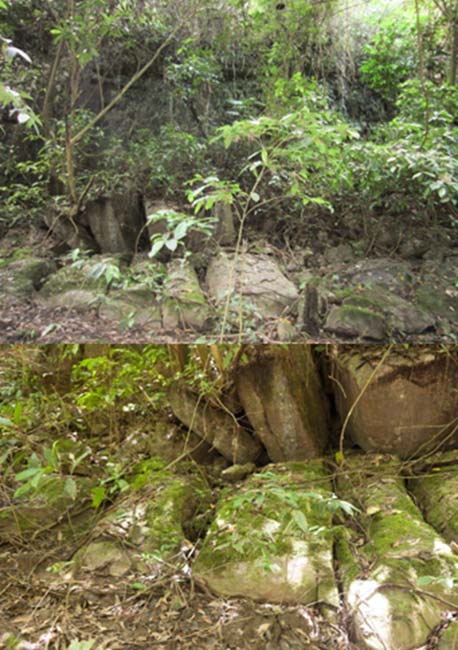
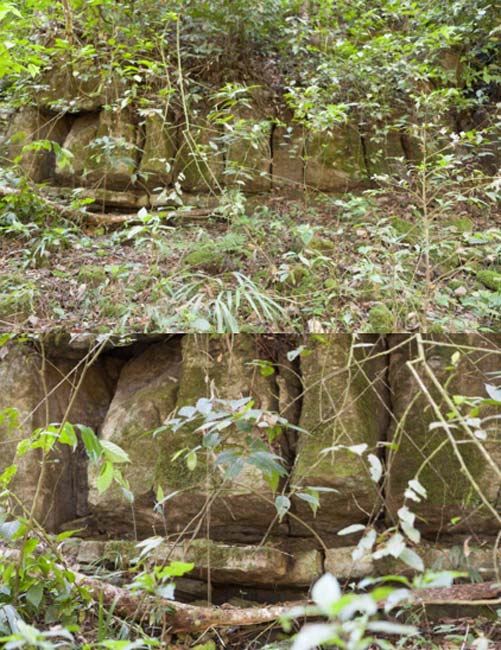
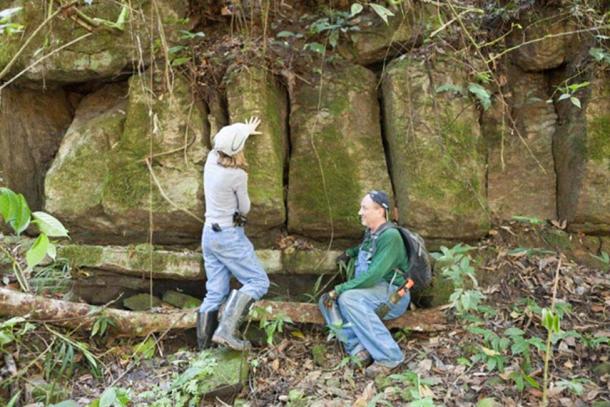
Despite the increasing numbers of cuts, scrapes, bumps, and bruises, the team kept their spirits up and continued our search for interesting sites on the long trek back to our lodging. We were rewarded for our curiosity with a mysterious rock structure that ran along a large section of land near the river. However, we had to leave it behind for at least one night, as 6pm and the quick falling darkness was on its way.
- On the trail of the Father Crespi Collection – Part I
- Pucara de Rumicucho Is More than just an Incan Stone Fortress
- Giant 7 – 8 Foot Skeletons Uncovered in Ecuador sent for Scientific Testing
Day Three
We found a way to pass the still active wasp hive and headed straight for the rock structure that called our attention the afternoon before. There we searched the area in front of the rocks and noted the appearance of “toes” at the foot of the structure. But the rocks could not be our focus that day and after a quick survey of the area we continued to search for cave entrances.
The sun had come out in full force, so we were ready for a swim by the time we reached some calmer waters along the river. As some of us cooled ourselves in the cool water, Wendi set off over a smaller “rock wall” and explored the area nearby. She found a possible cave entrance under some trees and called the rest of the team over to investigate.
We all searched the difficult terrain for more cave entrances, and the result of that afternoon’s work was at least five possible entrances in a relatively small area. However, the hot sun and physical stressors began to take its toll on the team and we had to return to camp a little earlier that day.
Day Four
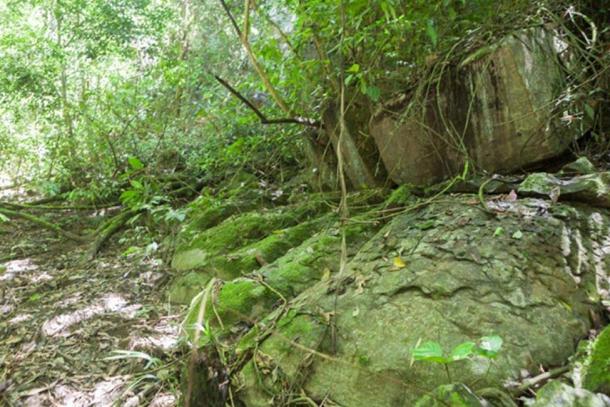
The rock structure called our attention once more and we decided to spend some more time examining it. However, we could not find any entrances that we could get through or any clear archaeological material suggesting its purpose or creation. Thus, the team split in two groups and hacked our way through the brush to climb up and over the apparent “wall” of giant rocks, but we still found no entrance or concrete evidence that the large stones had been placed intentionally. Without other tools, we were unable to see past or under the large stones. So, their origins remain uncertain.
Next, we went in the search of the source of a stream we had crossed the day before. The river had risen quite a lot over the last few days and we saw clear clues of the impending rainy season. The team climbed and slashed our way through brush up towards the white rock face that stood far above the river.
We experienced some serious rock climbing that day. We made our way up a steep slope of rock with natural hand and footholds and found another series of entrances. Unfortunately, all the openings proved to be impenetrable and one sharp rock inside provided a deep cut into a team member’s hand.
Following our descent, one of the team members took ill and another suffered a fall on the rocky river edge. We returned to our lodging where we mended ourselves more thoroughly with the medkits and tried to rest our aching bodies on the lightly cushioned beds.
Later that evening nature helped soothe us as it revealed its beauty once again – this time in the form of a blanket of stars.
Day Five – Departure
On our final morning in the Tayos village we awakened to see that the clear night we marveled at just so recently had turned into a rather foreboding morning sky. Our departure for Cuenca was planned for 7:30am and, despite the increasing clouds and more frequent rain drops, we said our goodbyes to the village.
Some of our hosts were kind enough to accompany and aid us as we inched our way up the steep hill, through the mud, past the (now slippery) “bridge of danger”, and pressed on through the rain up towards the road.
Perhaps unsurprisingly, by the time we reached the top about an hour later the clouds had cleared and a warm sun welcomed us once again.
Wrapping Up an Expedition
2026 update: As the team noted on Day Four, they found no entrance and no archaeological evidence that the rock structure was built by people. We have found no later archaeological study confirming a lost city in this area. Treat it as a natural formation until someone publishes evidence.
New Tayos cave entrances are still awaiting exploration and the nearby rock structure continues to beckon with its mystery. What secrets does this fascinating region still hold and when will they be revealed?
Our time in the Tayos village and caves was an experience no one will forget. The following are reflections written by Wendi and Scott on what they’ve taken away from this expedition with Ancient Origins.
Wendi
My interest in anthropology and archaeology started many years ago. The expedition experience with Ancient Origins offered the perfect opportunity to experience firsthand the field aspects of both disciplines.
I found the challenge of trekking through the Amazon forest stimulating and confidence building. Exploring the Tayos Caves was an arduous but thrilling experience. Searching the river bluffs for unknown entrances was exciting and invigorating. I particularly enjoyed the Shuar people and living in their environment.
The staff of Ancient Origins are knowledgeable and helpful. Their friendliness and companionship goes well beyond their professional obligations.
Scott
Anyone who knows me knows my life began with a love for archaeology. Many trips planned have been thwarted by political unrest or personal tragedy throughout my 63 years of experiences. Finally, this trip with John and Alicia of Ancient Origins fulfilled all my years of wondering and waiting for the opportunity. The Ancient Origins expedition whet my appetite for many more such adventures.
If one makes the time, their guidance is superb and highly affordable. It exceeds your expectations for real adventure back into history and our ancient origins.
By Alicia McDermott/Ancient Origins
All images are the copyright of Ancient Origins.
Top Image: “Toes” seen at the base of the strange rock structure found on the expedition.
How do you visit the Tayos Cave from Quito or Cuenca?
There is no road to the cave. From Quito, most travelers take an overnight or day bus to Macas and continue to Méndez; from Cuenca the road runs via Gualaceo and Limón Indanza. From Méndez you go by road to Puerto Yuquianza, cross the river and hike 3 to 4 km of muddy trail to the Kuankus community and the cave entrance. Plan on at least 3 days from a big city.
Book only with a guide from the Shuar community or an agency that works directly with them. The roughly 65 m rappel into the entrance shaft needs proper harnesses, helmets and headlamps, and the community sets the rules for who enters. Be honest with yourself about fitness: this is an expedition, not a sightseeing stop. We do not run this trip ourselves, but we are happy to talk you through current options on WhatsApp.
If you want the history without the rappel, Quito’s Museo Casa del Alabado (Calle Cuenca N1-41, Wednesday to Sunday) shows pre-Columbian pieces from across Ecuador, and our Free Walking Tour passes nearby.
Free Walking Tour Quito · free (tip-based), 3 h, Mon–Sat 10:30 & 14:30, Sun 10:30
Start with our English-speaking Ecuadorian guides in the Old Town: plazas, colonial churches, a market and chocolate tasting. Casa del Alabado is a few blocks from the route, so it is easy to visit right after.
Related guides
- Giant skeletons in Ecuador: what was claimed and what is documented
- Ingapirca: Cañari and Inca history and how to visit
- Devil’s Nose train in Alausí: the complete 2026 guide
- Hiking in Ecuador
- Cuyabeno Amazon tour from Quito
Plan it with us
Want help fitting this into your Ecuador route? Drop by our office at Pedro Fermín Cevallos N6-78 y Olmedo in Quito, message us on WhatsApp at +593 97 953 3832, or email info@communitytravel.ec. Our local guides answer the same day.
Frequently asked questions
Is there a lost city near the Tayos caves?
No lost city has been confirmed. Expeditions, including the 2017 Ancient Origins trip in this article, have reported unusual rock formations and unexplored cave entrances, but none found built structures or archaeological evidence of a city. The large 1976 Stan Hall expedition also found no metal library or hidden city.
Did Neil Armstrong go to the Tayos Cave?
Yes. Neil Armstrong joined the 1976 expedition led by Scottish researcher Stan Hall, a joint British-Ecuadorian project with more than 100 participants including soldiers, scientists and a film crew. They mapped the cave and found ancient burials, but no evidence of the golden or metal library that János Móricz had claimed.
Can tourists visit the Cueva de los Tayos?
Yes, but only with Shuar guides. The cave lies on land of the Kuankus (Coangos) community in Morona Santiago, and hiring a community guide is how you get permission to enter. Trips usually take three days from Méndez and include a jungle hike, camping and a roughly 65 m rappel down the entrance shaft.
How much does a Tayos Cave trip cost?
Group trips reported in 2025 cost roughly $230 to $350 per person, usually including guides, rappel gear, camping and food. Private trips cost more. Add bus fares from Quito or Cuenca to Méndez and a few dollars for transport to Puerto Yuquianza. Confirm what is included and which cave you will visit before paying.
Is the Tayos Cave dangerous?
It is demanding rather than dangerous with the right team. You rappel about 65 m on rope, wade and swim in cold water, and hike muddy jungle trail in heat. Go only with experienced community guides who provide harnesses, helmets and lights, avoid the rainiest months, and do not go if you have a fear of heights.