Quick answer: Quito’s Mercado Central is a covered municipal market on Av. Pichincha between Esmeraldas and Manabí, on the edge of the Old Town. It opens early in the morning and its food stalls serve until mid-afternoon. Go between 10:00 and 14:00 for locro de papa, fried corvina, hornado, fritada and fresh juices, at about $2–9 per dish in 2026.
Updated September 2026 by our local guides in Quito: we rewrote this short post into a full guide with the market’s location and hours, what to order, current prices, how to get there and our own tips from years of taking travelers inside.
| At a glance | Mercado Central, Quito |
|---|---|
| Where | Av. Pichincha between Esmeraldas and Manabí, Centro Histórico |
| From our office | About a 10-minute walk from Pedro Fermín Cevallos N6-78 y Olmedo |
| Opening hours | Daily from about 7:00; food stalls wind down around 15:00–16:00 (earlier on Sundays) |
| Best time to eat | 10:00–14:00, when everything is freshly cooked |
| Cost as of 2026 | Juice $1.50–2.50 · soup $3–4 · hornado or fritada $5–7 · corvina plate $6–9 |
| Payment | Cash in US dollars, small bills |
| Best for | Traditional Quito food on a budget, fruit, and a real local atmosphere |
We have been taking travelers into the Mercado Central for years, and it is still where our own guides go for a Saturday bowl of locro. It is not a polished food hall. It is a working municipal market where Quiteños shop for fruit, meat and flowers, and where families sit elbow to elbow at long counters for some of the cheapest traditional food in the city. If you want to understand what people in Quito actually eat, this is the place.
Where is Quito’s Mercado Central and when is it open?
The market fills the block on Av. Pichincha between Esmeraldas and Manabí, on the northeast edge of the historic center. It has been trading here since the early 1950s, when vendors from two open-air markets were moved into one covered building, and today it holds around 200 stalls selling produce, meat, fish, herbs, flowers and cooked food.
Opening hours are not posted in one official place and vary slightly by stall, so here is what we see on the ground. The market opens around 7:00 every day. Most cooked-food stalls serve from mid-morning until about 15:00 or 16:00, and they close a little earlier on Sundays. The popular corvina counter upstairs, Corvinas Don Jimmy, lists 8:00 to about 16:00 on weekdays and 8:00 to 15:00 on weekends. After mid-afternoon the aisles empty quickly, so do not plan a late lunch here.
Local tip: Go on a weekday late morning. Weekends and public holidays bring big family crowds at lunchtime, and by 14:30 the best hornado and the most popular soups can be sold out.
What should you order at Mercado Central?
The cooked-food stalls are grouped in patios, and each stall usually specializes in one or two dishes. Vendors will call you over with menus, which is normal and friendly. Here is what we recommend first-timers try.
Locro de papa
A thick, creamy potato soup made with cheese and a little achiote, served with slices of avocado on top. It is the classic Quito comfort food, mild and filling, and a good first dish if you are still adjusting to the altitude. Expect to pay around $3 to $4 a bowl.
Corvina frita
Fried corvina (a white sea fish) is the market’s most famous dish. It comes with potatoes or rice, and many stalls add a small cup of ceviche on the side. The best-known counter is Corvinas Don Jimmy on the upper level, where a corvina plate costs roughly $7.50 to $9.50 depending on the combination. Other corvina stalls nearby charge a bit less. Squeeze lime over the fish and try the ají (chili sauce) carefully.
Hornado
Whole roast pork, carved to order and served with llapingachos (potato and cheese patties), mote (hominy), salad and a spoon of agrio, a tangy sauce made from the roasting juices. A typical market plate of hornado in Quito costs around $5 to $6.50, often with a drink included.
Fritada
Chunks of pork simmered and then fried in their own fat, served with mote, ripe plantain, potatoes and tostado (toasted corn). It is richer than hornado and very popular for weekend lunches. Plan on $5 to $7.
Yaguarlocro and other soups
If you are adventurous, try yaguarlocro, a potato soup with lamb offal topped with a spoon of blood and onion. Other soups you will see on the boards are caldo de gallina (hen broth), caldo de patas (cow-foot soup) and, on the coastal stalls, encebollado, a tuna and yuca soup that locals swear by after a late night.
Fresh juices and fruit
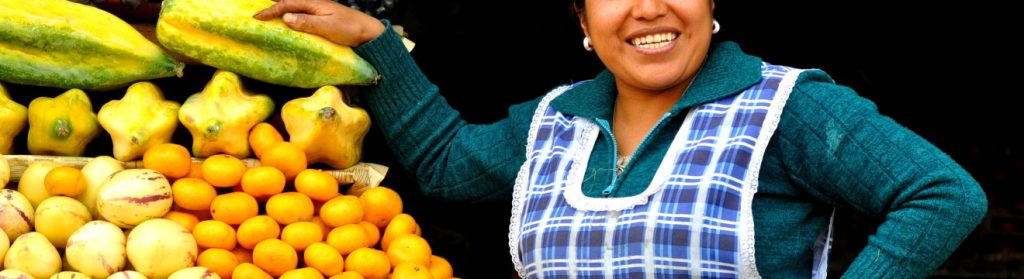
Walk through the fruit section before or after eating. Juice stalls blend whatever is in season, and the Andean flavors are the ones to try: mora (blackberry), naranjilla, tomate de árbol (tree tomato), maracuyá and guanábana. A large glass costs about $1.50 to $2.50. Ask for it “sin azúcar” if you prefer it unsweetened and “sin hielo” if you want to skip the ice.
Fruit vendors are usually happy to cut a sample of anything unfamiliar. Look for granadilla, pitahaya, taxo and uvilla (golden berry). It is one of the cheapest ways to learn about Ecuador’s produce.
How much does a meal at Mercado Central cost in 2026?
Prices have gone up a little in recent years, but the market is still one of the best-value places to eat in Quito. Here is what we typically pay.
| Dish | What you get | Typical price (2026) |
|---|---|---|
| Locro de papa | Bowl of potato and cheese soup with avocado | $3–4 |
| Corvina frita | Fried fish with potatoes or rice, often with ceviche | $6–9.50 |
| Hornado | Roast pork, llapingachos, mote, salad | $5–6.50 |
| Fritada | Fried pork, mote, plantain, potatoes | $5–7 |
| Ceviche | Shrimp, shell or mixed, with popcorn and chifles | $6–10 |
| Fresh juice | Large glass of blended fruit | $1.50–2.50 |
| Soft drink or beer | Bottle | $1.25–2 |
A filling lunch with a juice usually comes to $5 to $12 per person. For comparison, a similar plate in a sit-down restaurant in La Mariscal or La Floresta often costs double. See our Ecuador budget guide for daily food costs across the country.
How does ordering at the market work?
There is no central counter. You choose a stall, sit on the bench in front of it and order directly from the cook. Most stalls have a printed menu with prices, and many vendors now speak a few words of English, but a little Spanish helps: “una porción de hornado, por favor” or “¿cuánto cuesta?”.
- Pay in cash, in US dollars, once you finish. Card machines are rare and $20 bills can be hard to change.
- Portions are big. Two people can share a plate of hornado or fritada and still try a soup.
- Napkins and hand sanitizer are worth bringing. Some stalls have handwashing sinks nearby, but not all.
- Tipping is not expected at market stalls. Rounding up or leaving a coin is appreciated.
Local tip: Vendors are called caseras or caseritos, and regulars use those words when ordering. Say “gracias, casera” when you pay and you will get a smile, and often a bigger portion next time.
Is Mercado Central safe and clean?
The market itself is busy and generally safe during the day, and cooked food turns over fast, which helps with freshness. The main risk is pickpocketing in crowded aisles and on the surrounding streets. Keep your phone in a front pocket, carry only the cash you need and leave passports at your hotel. Avoid the area around the market and La Marín after dark.
For food safety, choose stalls with a steady stream of local customers, eat hot dishes, and go easy on raw salads and ice during your first days in Ecuador. If you are worried about altitude, eat lighter at lunch and drink water; our guide to altitude sickness in Quito has more tips.
For a wider view of safety in the city and country, read Is Ecuador safe to travel in 2026?
What else is there to see beyond the food stalls?
The Mercado Central is also a working produce market, and the non-food sections are part of the experience. The fruit and vegetable aisles are the most colorful, with pyramids of mangoes, avocados and dozens of potato varieties. There are sections for meat and fish, a flower area, and stalls selling medicinal herbs, where some vendors still offer traditional limpias, cleansing rituals with plants and eggs. Ask before taking photos of vendors, especially at the herb stalls.
The market is an easy add-on to a day in the Old Town. From here it is a short walk to Plaza Grande, the Basilica del Voto Nacional and San Francisco. Our one perfect day in Quito itinerary shows how to fit it in, and our list of Ecuadorian street foods covers what to snack on in between.
How do you visit Mercado Central on your own or with a guide?
From our office at Pedro Fermín Cevallos N6-78 y Olmedo it is about a 10-minute walk. From the New Town (La Mariscal or La Floresta), a taxi or ride-hailing app to the Old Town costs roughly $3 to $5 in daytime traffic. The Ecovía bus line runs down to La Marín, a few blocks south of the market, and the Quito Metro’s San Francisco station is about a 15-minute walk away.
If you would rather go with someone who knows the stalls, our Free Walking Tour stops inside a traditional market as part of the Old Town route.
Free Walking Tour Quito · Free (tip-based) · 3 hours · Mon–Sat 10:30 & 14:30, Sun 10:30
Colonial plazas and churches, a traditional market and a chocolate tasting with an English-speaking Ecuadorian guide. Meet 10 minutes early at Pedro Fermín Cevallos N6-78 y Olmedo.
Related guides
- Ecuadorian street foods you must try
- Things to do in Quito
- Where to stay in Quito
- One perfect day in Quito’s Old Town
Plan it with us
Want to eat your way through Quito with a local? Visit us at Pedro Fermín Cevallos N6-78 y Olmedo, message us on WhatsApp at +593 97 953 3832, or email info@communitytravel.ec and our guides will point you to their favorite stalls.
Frequently asked questions
What are the opening hours of Mercado Central in Quito?
Mercado Central opens daily from around 7:00. Most cooked-food stalls serve from mid-morning until about 15:00 or 16:00 and close a little earlier on Sundays. Hours vary by stall, so the safest window for a full lunch is 10:00 to 14:00. The market is essentially closed by late afternoon.
Where is Mercado Central in Quito?
Mercado Central is on Av. Pichincha between Esmeraldas and Manabí streets, on the northeast edge of Quito’s historic center. It is a short walk from Plaza Grande and about 10 minutes on foot from our office at Pedro Fermín Cevallos N6-78 y Olmedo. The Ecovía bus line ends at La Marín, a few blocks south.
What is the best food to eat at Mercado Central?
The market’s signature dish is fried corvina with potatoes or rice, often served with a small ceviche. Other must-tries are locro de papa (potato and cheese soup with avocado), hornado (roast pork with llapingachos), fritada (fried pork with mote and plantain) and fresh juices made from Andean fruits like naranjilla, mora and tomate de árbol.
How much does it cost to eat at Mercado Central in 2026?
Most dishes cost between $3 and $9.50 in 2026. A bowl of locro de papa is about $3 to $4, a plate of hornado or fritada $5 to $7, a corvina plate $6 to $9.50 and a large fresh juice $1.50 to $2.50. Pay in cash with small US dollar bills.
Is Mercado Central in Quito safe for tourists?
Mercado Central is generally safe for tourists during the day. The main risk is pickpocketing in crowded aisles and nearby streets, so keep your phone in a front pocket, carry only the cash you need and leave your passport at your hotel. Avoid the surrounding area after dark and choose busy stalls with hot, freshly cooked food.