Quick answer: Pucará de Rumicucho is a hilltop Inca site of five stone terraces in San Antonio de Pichincha, a few kilometers north of the Mitad del Mundo monument. Built around 1480–1500, it worked as a military, ceremonial and control post. It is community-run, open daily 8:30–17:00, and entry costs $2 as of 2026.
Updated September 2026 by our local guides in Quito: we added current entry fee, hours and directions, and updated where the excavated artifacts are displayed today.
| Pucará de Rumicucho at a glance (2026) | |
|---|---|
| Where | San Antonio de Pichincha, about 2.5 km along the old road to San José de Minas, north of the Mitad del Mundo monument |
| Altitude | About 2,400 m, lower, drier and warmer than Quito |
| How to get there from Quito | Bus to La Ofelia terminal, then the “Mitad del Mundo” bus and a short taxi from San Antonio; or a taxi/app car from Quito (about 1 hour) |
| Entry | $2 per person (community-managed) |
| Opening hours | Daily, 8:30–17:00 |
| Time needed | About 1 hour with a site guide |
| Best for | Combining with Mitad del Mundo, archaeology fans, views over the dry Guayllabamba valley |
Local tip: There is almost no shade on the terraces and the sun at the equator is strong. Bring water, a hat and sunscreen, and go before noon, when the wind picks up and dust blows across the valley.
Author: ALICIA MCDERMOTT
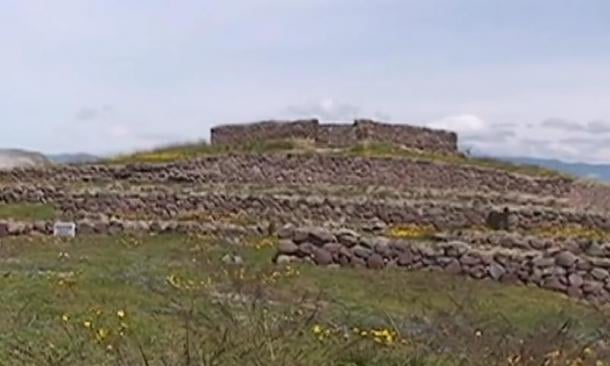
The ruins of the Pucará de Rumicucho are well-preserved walls of an Pre-hispanic, Incan fortress. They are located a one hour drive north of Quito, Ecuador. The fortress was built in the end of the 15th century by Tupac Yupanqui, the tenth Sapa Inca (God Emperor). However, archaeologists have shown that the site predates the Inca period and served as more than just a military stronghold. The key location of the site corresponds well with astronomical activities as well. Today the ruins are well-maintained and frequent tourist visits, as well as indigenous ceremonies, take place there.
Architectural Features of The Stone Fortress
2026 note: Published measurements of the hill vary. Some sources give about 400 by 100 meters; others, based on archaeological surveys, give about 380 by 75 meters. Either way, the five terraces are easy to walk in under an hour.
The name Pucará de Rumicucho, is Kichwa meaning fortress (Pucara) of stone (Rumi) corner (cucho), often translated as The Stone Fortress. This is an obviously descriptive name for at least one of the previous uses of the site. It has also been called Lulumbamba – “fertile plain.” It is believed that it was constructed between 1480 and 1500, by the Inca ruler Tupac Yupanqui.
The structure on the site consists of five terraces and measures at 400 meters (1312 feet) long, 100 meters (328 feet) wide and 20 meters (65.5 feet) high. The cut-stone walls are made up of pucarui (reddish color) and pugshi (volcanic ash) as well as chocoto and pumice stone. The dating of the fortress construction of between 1480-1500 has been decided upon by this particular stone and mortar combination.
- The Inca-Caranqui Water Temple of Ecuador: A display of wealth and skillful hydraulic engineering
- Decapitation discovery reveals gruesome practices of the ancient Incas
- Have explorers in Ecuador found ‘Lost City of Giants’?
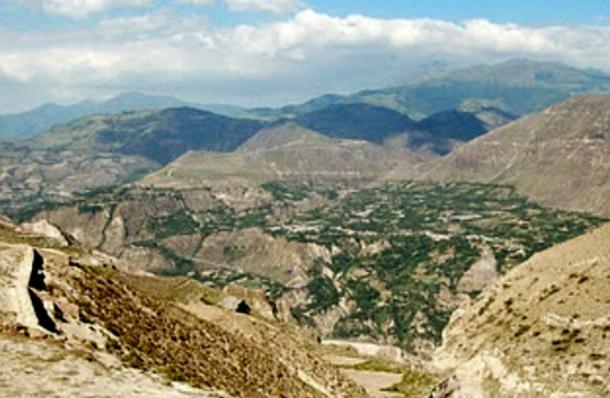
The stone fotress is situated atop a hill, providing a perfect view not only of invading forces, but also of the mountains surrounding it on three sides and the valley to the South.
Artifacts Discovered at the Site of Rumicucho
2026 update: The Banco Central museum mentioned here no longer exists under that name. Its archaeological collections are now part of the Museo Nacional del Ecuador (MuNa) in the Casa de la Cultura, Av. Patria and Av. 6 de Diciembre, with free entry (Tuesday to Saturday 10:00–17:00, Sundays and holidays 10:00–16:00). The small community museum at Rumicucho is open and shows ceramics, stone tools and bone objects found on site.
Archaeologists have been excavating the Pucará de Rumicucho since 1976 when Ecuadorian archaeologist, Eduardo Almeida, started his study of the site financed by the Ecuadorian Central Bank Museum. It was continually excavated from that time until 1990.
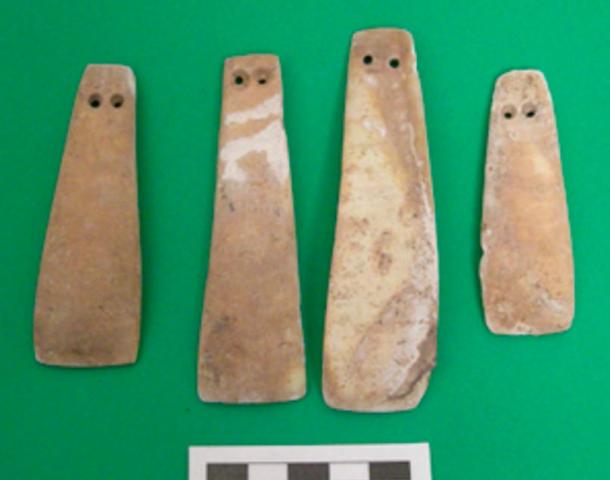
Rumicucho was rich in cultural material and some of the artifacts encountered at the site include: stone tools, metal, ceramic pottery (mostly creted by local Pre-Inca cultures), and shell and camelid bone objects such as needles, hairpins, awls and zoomorphic figurines. Today these artifacts are mostly exhibted in the Banco Central Museum in Quito, although an on-site museum has recently opened with the goal to return materials “home” and to increase the cultural and social value of the site.
The Multi-Use Site of Pucará de Rumicucho
The Pucará de Rumicucho is part of a chain of Incan fortresses showing their expansion and military rule over captured lands. The Incan military infrastructure often included paths, bridges, tambos (inns or resting places) and pucaráes (fortresses). The Pucará de Rumicucho was constructed as a military control center in the Quito territory, helping to advance the conquest over the Cayambe and Caranqui villages.
Although the Rumicucho fortress was arguably constructed during the Inca period, there is a strong belief by archaeologists that the site was used before the Incan invasion of Ecuador. Archaeological evidence suggests that it may have also been used by the Pre-Incan Caranquis, Quitus, Panzaleos and Cuasmal. Another explanation for Pre-Inca artifacts is that the Incas living at the site shared the space with the local communities.
Archaeologists have divided the site of Rumicucho into three sections for different uses based on their discoveries. There is the ceremonial section on the third terrace, a ritual and food consumption space on the first and second terraces, and it is believed that the rest of the space was used for workshops and housing.
- Secrets of Vilcabamba, Playground of the Inca and Valley of Longevity
- Andean Village comes alive with Pawkar Raymi, Equinox Celebration to honor Mother Earth
- Father Crespi and the missing golden artifacts
The Secrets of the Oval Rooms and Rumi Jatun
Two oval rooms and the Rumi Jatun (giant rock), which is aligned perfectly with two mountains have lead many to believe that the site of Rumicucho also had an important astronomical role. Some have suggested that the rock represents the sun during the day and at night it can be filled with water as a mirror of the stars. The two rooms have been associated with the solstices. As is known, the Inca civilization had an advanced knowledge regarding astronomy and often built their structures with it in mind.
The two rooms and the giant rock are located in the northern part of the ruins, and despite rigorous studies, it has yet to be discovered what secrets they hold. It has only been agreed upon that they were not casually created.
The Secrets of the Oval Rooms and Rumi Jatun
Two oval rooms and the Rumi Jatun (giant rock), which is aligned perfectly with two mountains have lead many to believe that the site of Rumicucho also had an important astronomical role. Some have suggested that the rock represents the sun during the day and at night it can be filled with water as a mirror of the stars. The two rooms have been associated with the solstices. As is known, the Inca civilization had an advanced knowledge regarding astronomy and often built their structures with it in mind.
The two rooms and the giant rock are located in the northern part of the ruins, and despite rigorous studies, it has yet to be discovered what secrets they hold. It has only been agreed upon that they were not casually created.
Modern day Uses of the Stone Fortress Site
2026 update: The site is still managed by local community organizations, and the $2 entry helps pay for its upkeep. It continues to host occasional Andean ceremonies, often around the solstices and equinoxes. If you arrive during one, ask before taking photos.
These days the Pucará de Rumicucho, like many Andean archaeological sites, serves sacred connection to the past. The location on the equator has connected it to a ritual of the “hombre sin sombra” (man without a shadow.) Many indigenous shamans have used this space for rituals during solstices.
The site is also popular for tourists and students. The well-maintained space and beautiful views has created interest for local and to a lesser extent foreign tourism. For these reasons the stone fortress has been routinely visited since Almeida’s excavations in 1976.
Due to the number of visitors to the site for sacred, educational and touristic purposes, there is a real concern by local authorities for the future of the Pucará de Rumicucho. The urban advance also threatens as Ecuador’s capital city continues to grow. One can hope that the well-planned Incan astronomy as well as the archaeological and sacred value of the site will preserve it.
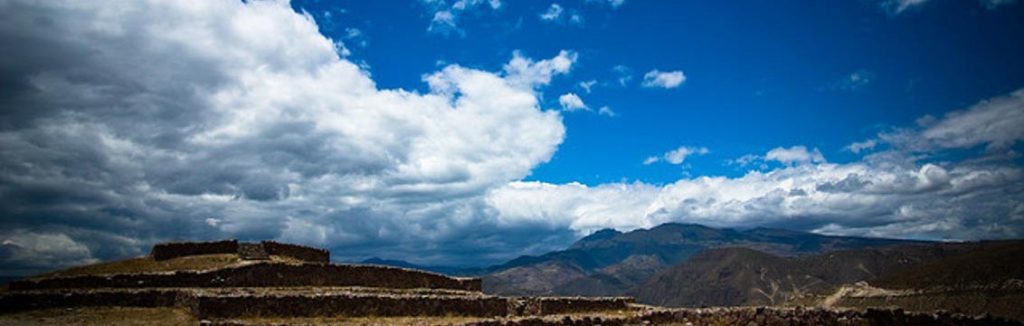
Featured image: The ruins of the Pucará de Rumicucho, San Antonio de Pichincha, Ecuador (INyar/Flickr)
How do you visit Pucará de Rumicucho from Quito?
The easiest way is to pair it with the equator. Visit the Mitad del Mundo monument and Intiñán Museum in the morning, then take a short taxi ride north through San Antonio de Pichincha to Rumicucho. By public transport, ride the Metrobus-Q or Trolebús to La Ofelia terminal ($0.35 in 2026) and take the “Mitad del Mundo” bus; from San Antonio, a local taxi is the simplest last step. Agree the fare before you get in.
If you want context before you go, Quito’s Old Town tells the other half of the story: the Inca city that stood here, and what the Spanish built on top of it.
Free Walking Tour Quito · Free (tip-based) · 3 hours · Mon–Sat 10:30 & 14:30, Sun 10:30
Our Ecuadorian guides cover the Inca and colonial history of Quito while walking the Old Town’s plazas, churches and a local market, with a chocolate tasting included. It is a good way to connect the dots after visiting Rumicucho.
Related guides
- Mitad del Mundo: monuments, history and how to visit
- A short history of Quito, from Inca city to UNESCO Old Town
- Ingapirca, Ecuador’s largest Inca site
- Laguna Yahuarcocha and the Inca conquest of the north
- Things to do in Quito
Plan it with us
Questions about getting around Quito? Drop by our office at Pedro Fermín Cevallos N6-78 y Olmedo, on the edge of the Old Town, message us on WhatsApp at +593 97 953 3832, or write to info@communitytravel.ec. Our local guides answer every day and can help you plan the rest of your Ecuador trip.
Frequently asked questions
What is Pucará de Rumicucho?
Pucará de Rumicucho is an archaeological site of five stone terraces on a hill in San Antonio de Pichincha, north of Quito. The name is Kichwa for roughly ‘stone corner fortress’. Built by the Inca around 1480 to 1500 on a site that earlier local peoples may also have used, it served as a military, ceremonial and trade-control post.
How much does it cost to visit Pucará de Rumicucho?
Entry costs $2 per person as of 2026. The site is managed by local community organizations, and the fee supports upkeep and the small on-site museum. It is open every day from 8:30 to 17:00. A visit with a site guide takes about one hour.
How far is Rumicucho from the Mitad del Mundo monument?
It is only a few kilometers north, about 2.5 km along the old road to San José de Minas from San Antonio de Pichincha. By taxi it takes around 10 minutes from the monument area, so it is easy to add to a half-day equator trip from Quito.
Who built Pucará de Rumicucho?
Archaeologists date the stone terraces to the Inca expansion in the late 15th century, associated with Túpac Yupanqui’s northern campaigns. Excavations that began in the 1970s also found material linked to earlier local peoples. The Inca used the hill as one link in a chain of pucarás, or fortified posts, that controlled routes around Quito.
Where can I see the artifacts found at Rumicucho?
A small community museum at the site displays ceramics, stone tools and bone objects from the excavations. Many pieces went to the former Banco Central museum in Quito, whose collections are now part of the Museo Nacional del Ecuador (MuNa) at the Casa de la Cultura, which has free entry.